- The 100kW solar mini-grid was commissioned in the Damau Community, Kaduna State.
- The project is implemented under the REA’s 2024 Capital Projects.
Reliable power delivery is most impactful when leadership is visibly aligned with the needs of the people, Dr Abba Aliyu, Managing Director/CEO of the Rural Electrification Agency (REA), said at the commissioning of a 100kW solar mini-grid in the Damau community in the Kubau Local Government Area of Kaduna State.
The project, implemented under the REA’s 2024 Capital Projects, was commissioned by Aliyu alongside the Executive Governor of Kaduna State, Senator Uba Sani. This project represents growing collaboration between federal and subnational governments to expand electricity access.
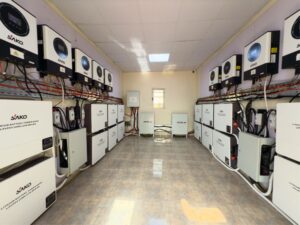
Aliyu, who made this known on his official LinkedIn page, described the Damau mini-grid as “a clear example of what is possible when federal and state governments work with shared purpose.” He noted that such partnerships are critical to closing Nigeria’s energy access gap.
During the commissioning, Governor Sani reaffirmed Kaduna State’s commitment to its partnership with the REA. He assured residents of Damau that the project is one of several planned under the Memorandum of Understanding between the state government and the agency. He said the administration remains focused on translating policy commitments into tangible benefits for communities.
The commissioning also drew commendation for legislative support at the national level. Aliyu acknowledged the Speaker of the House of Representatives, Rt. Hon. Tajuddeen Abbas, for his leadership in backing policies and initiatives that expand energy access nationwide. He also praised Dr Mustapha Aliyu Abdullahi, representing Ikara/Kubau Federal Constituency, for his consistent advocacy to ensure underserved communities benefit from reliable and sustainable power solutions.
For residents of Damau, Aliyu noted that the mini-grid represents more than an electricity supply. It is expected to support extended business hours, improve security through better street lighting, enhance livelihoods, and strengthen public confidence in coordinated government action.
The project underscores ongoing efforts to address Nigeria’s electricity deficit through collaboration, clear commitments, and last-mile delivery, reinforcing the role of renewable energy solutions in driving inclusive development.