- Azerbaijan and Brazil’s COP presidencies launched the Baku to Belém Roadmap to mobilise US$1.3 trillion a year by 2035 and reset the global financial system to meet climate goals.
- Critics argue that it overlooks polluter accountability, relies excessively on private finance, and fails to address debt and loss-and-damage gaps.
Azerbaijan and Brazil, the presidencies of COP29 and COP30, have launched a bold plan to mobilise US$1.3 trillion annually by 2035 to help developing countries tackle climate change. They unveiled the plan, titled “The Baku to Belém Roadmap,” on Thursday, November 6, urging world leaders to reset the global financial system to meet urgent climate goals.
The roadmap emerged after months of intense negotiations in Baku, where developing nations rejected the initial proposal of US$300 billion per year as inadequate to address worsening climate impacts. Wealthy nations, including the G7 and European Union, eventually expanded the target, agreeing to channel up to US$1 trillion through a mix of public, private, and multilateral sources.
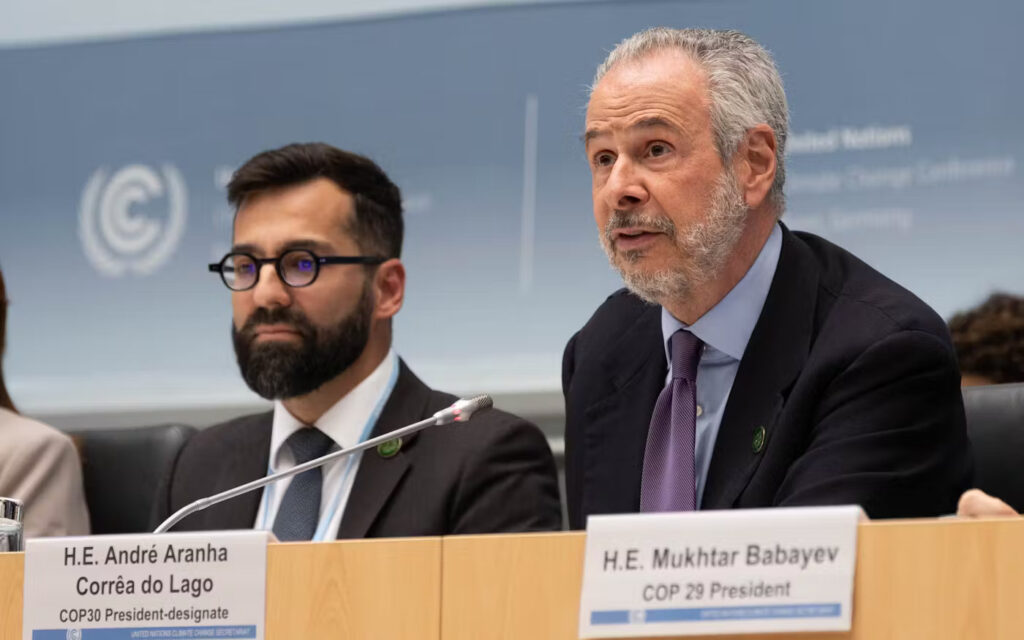
In a joint statement, COP29 President Mukhtar Babayev and COP30 President André Aranha Corrêa do Lago described the roadmap as a decisive step towards securing a livable planet.
“If countries strategically redirect and deploy resources effectively, and if the international financial architecture fulfils its purpose of ensuring decent prospects for life, the US$1.3 trillion goal will become an achievable global investment in our present and our future,” they stated.
However, the plan triggered criticism from climate advocates who believe it fails to address systemic inequalities. Harjeet Singh, founding director of the Satat Sampada Climate Foundation, highlighted contradictions within the proposal. He noted that 3.4 billion people live in countries that spend more on debt interest than on health or education. Yet, the roadmap relies heavily on private finance and multilateral development banks.
“The roadmap identifies the symptoms of a broken financial system but fails to prescribe the cure,” Singh said. “It offers a band-aid for a mortal wound and ignores accountability.”
Singh also criticised the document for its silence on polluter responsibility. He pointed out that the top 10 per cent of global emitters produce almost half of all emissions. However, the roadmap does not require developed nations to contribute based on their fair share or historical responsibility.
In contrast, some experts praised the initiative. Melanie Robinson, Global Director of Climate, Economics and Finance at the World Resources Institute, commended Azerbaijan and Brazil for proposing a more inclusive financial model.
“The roadmap rewires the financial system so all actors pull in the same direction,” Robinson said. “Success in Belém will depend on whether countries align finance behind national priorities and ensure scarce grants reach those who need them most. The roadmap shows how to reach US$1.3 trillion; now the world must deliver.”
As the world prepares for COP30 in Belém, the roadmap sets the stage for a defining moment in global climate finance. Can global leaders turn a trillion-dollar vision into real, just, and effective climate action?