- COP30 in Belém will finalise 100 indicators to track global progress on the Global Goal on Adaptation (GGA).
- Experts warn that without adequate funding and political will, the GGA could become a reporting exercise rather than a resilience tool.
As world leaders prepare to gather in Belém, Brazil, for COP30, negotiators aim to finalise a milestone agreement, a set of indicators to track global progress on climate adaptation under the Global Goal on Adaptation (GGA).
Experts expect this outcome to be one of the most significant achievements of the UN climate summit. In the months leading up to COP30, President-designate André Corrêa do Lago urged countries to seize what he described as a “window of opportunity” to shape the future of global adaptation.
“Adaptation is no longer a choice,” he wrote. “There is a window of opportunity to define a robust framework to track collective progress on adaptation. This milestone will lay the groundwork for the future of the adaptation agenda.”
Yet achieving consensus has proved difficult. Nearly 90 experts have spent two years reducing a list of almost 10,000 potential indicators to just 100, which negotiators hope to adopt at COP30. The process has exposed the complex, context-specific nature of adaptation; what resilience looks like differs widely across regions, communities, and ecosystems.
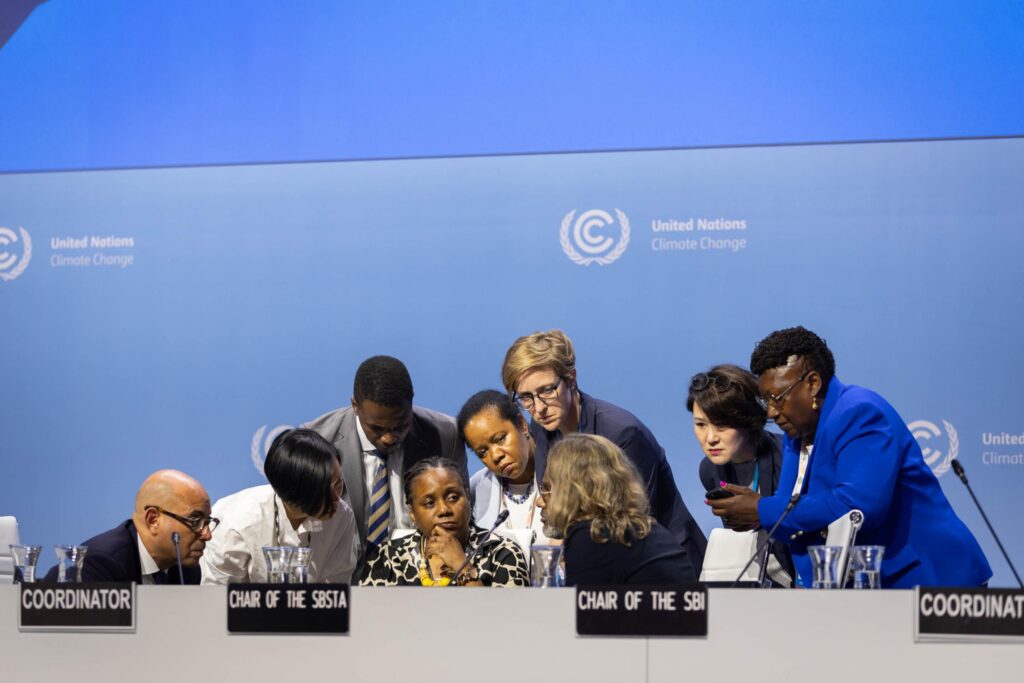
Defining the Global Goal on Adaptation
Parties first established the Global Goal on Adaptation (GGA) in the 2015 Paris Agreement to enhance adaptive capacity, strengthen resilience, and reduce vulnerability to climate change. While the goal recognised the urgency of adaptation, it lacked detail on how to measure progress.
Efforts to advance the GGA stalled for six years after Paris, until COP26 in Glasgow launched the Glasgow–Sharm el-Sheikh work programme, followed by the UAE–Belém work programme at COP28. These initiatives aimed to define concrete targets and indicators for adaptation, culminating in the framework that now guides global negotiations.
Ana Mulio Alvarez of E3G called the GGA “the equivalent of the 1.5°C goal for mitigation, a north star to guide global adaptation efforts.”
Why Measuring Adaptation Remains Difficult
Experts agree that measuring adaptation remains one of the most challenging tasks in climate policy. Emilie Beauchamp of the International Institute for Sustainable Development (IISD) explained that adaptation depends heavily on local realities: “Adaptation is contextual. Resilience means different things to different people in different places, and that makes progress hard to quantify.”
Dr Portia Adade Williams, a research scientist at Ghana’s CSIR–Science and Technology Policy Research Institute, noted that data limitations and weak monitoring systems in developing countries also hinder progress tracking.
“Most frameworks still measure outputs, such as infrastructure built or trainings conducted, rather than outcomes that show reduced vulnerability or improved resilience,” she said.
A Long Road to Agreement
Tense negotiations at COP28 in Dubai resulted in the GGA framework, which encompasses 11 targets covering both adaptation processes (risk assessment, planning, implementation, and learning) and seven thematic areas: water, food, health, ecosystems, infrastructure, poverty eradication, and cultural heritage.
However, disputes over finance and accountability weakened the final text. Developed and developing nations clashed over how to define and measure adaptation finance, with poorer countries demanding stronger commitments to adaptation finance. Despite these tensions, COP28 adopted the framework and launched the Baku Adaptation Roadmap (BAR) to guide further progress.
Between 2024 and 2025, experts refined the indicators from 9,000 to 490, and eventually to 100, through technical workshops under the UAE–Belém programme. The group worked with limited funding and tight deadlines, balancing scientific rigour with political realities.
Bethan Laughlin, senior policy specialist at the Zoological Society of London, said the biggest challenge lay in balancing ambition and feasibility: “The scale and diversity of adaptation action mean we need a diverse set of indicators. But they must remain practical, especially for countries with limited capacity.”
The Stakes for Belém
At COP30, countries plan to adopt the final list of 100 indicators, effectively launching the operational phase of the GGA. Corrêa do Lago has called adaptation “the visible face of the global response to climate change” and urged nations to deliver tangible benefits for societies, ecosystems, and economies.
However, negotiations will again pivot on finance. Many developing countries remain frustrated by the shortfall in adaptation funding, even after the Glasgow pledge to double finance by 2025. E3G described finance as the “political litmus test for success in Belém,” warning that vulnerable countries demand proof that funding will flow.
Adade Williams expects COP30 to focus on bridging the adaptation finance gap and linking indicators to means of implementation such as finance, technology transfer, and capacity-building.
“Without sustained finance and institutional support, the GGA risks becoming a reporting framework rather than a transformative mechanism,” she said.
What the GGA Could Mean for Vulnerable Communities
Experts view the GGA as both a symbolic and practical step toward resilience. Mulio Alvarez said the indicators will “initially reveal the scale of adaptation needs, but over time, they can guide national planning, risk assessments, and investment.”
Others remain cautious. Professor Lisa Schipper of the University of Bonn warned that if poorly designed, the indicators could limit ambition or even produce maladaptive outcomes.
“This is not enough,” she said. “We risk narrowing adaptation to metrics that fail to make people safer.”
Despite these concerns, Laughlin believes successful implementation could embed resilience across development policy: “For vulnerable populations, this means shifting from a reactive approach to a proactive one, restoring ecosystems, strengthening infrastructure, and empowering local communities.”
As COP30 opens on November 10, negotiators face the challenge of transforming a decade of dialogue into action. The Global Goal on Adaptation could finally provide the world with a measurable path to resilience, if nations match their ambition with sufficient resources and political will.