The Group of Twenty (G20) has evolved into one of the most influential platforms shaping the future of global energy. Together, its members represent over 80% of global energy demand and around 75% of greenhouse gas emissions, meaning decisions taken within this forum have far-reaching implications for energy security and the global climate agenda.
In 2025, under South Africa’s presidency, the G20 adopted the theme “Solidarity, Equality, Sustainability”, marking the first time the forum’s agenda was anchored in the Global South. The presidency’s priorities reflected the continent’s dual challenge: securing affordable energy for growth while navigating the imperative of global decarbonisation.
When the G20 was established in 1999, its goal was to prevent financial instability. Energy and climate were peripheral. However, as energy prices soared and climate change intensified, energy security and sustainability became inseparable from economic stability.
Over the years, the G20 has expanded its portfolio to include clean energy finance, just transitions, and resilient infrastructure. Its Energy Transitions Working Group (ETWG) and Infrastructure Working Group (IWG) now act as platforms for aligning national policies with global energy objectives.
Driving the Transition, Managing the Risks
Furthermore, energy markets have repeatedly tested global stability, from oil supply disruptions to price surges triggered by geopolitical conflicts. The G20 provides a platform for coordinated responses, enabling member states to share strategies, stabilise supply chains, and manage market shocks. Joint commitments on strategic reserves, transparency in energy data, and collaboration with institutions such as the International Energy Agency (IEA) have become vital tools for crisis management.
In recent years, G20 summits have yielded frameworks that push for increased renewable deployment, responsible fossil fuel phase-down, and improved energy access. Member countries have sought to enhance energy data transparency and financing for sustainable projects through partnerships with the International Energy Agency and multilateral banks.
Catalysing the Renewable Revolution
The G20’s most significant impact is driving the shift toward clean energy. Through its Energy Transitions Working Group, the forum promotes investment in renewables, energy efficiency, and emerging technologies such as green hydrogen, carbon capture, and battery storage. Recent presidencies have emphasised inclusive transitions, ensuring developing economies are not left behind as the world decarbonises.
Under successive host nations, the G20 has endorsed frameworks to accelerate renewable deployment, phase down coal, and mobilise finance for low-carbon projects. These collective commitments signal to markets and investors that the global direction of travel is unmistakable: cleaner, smarter, and more resilient energy systems.
Key Energy-Related Outcomes from 2025 Meetings
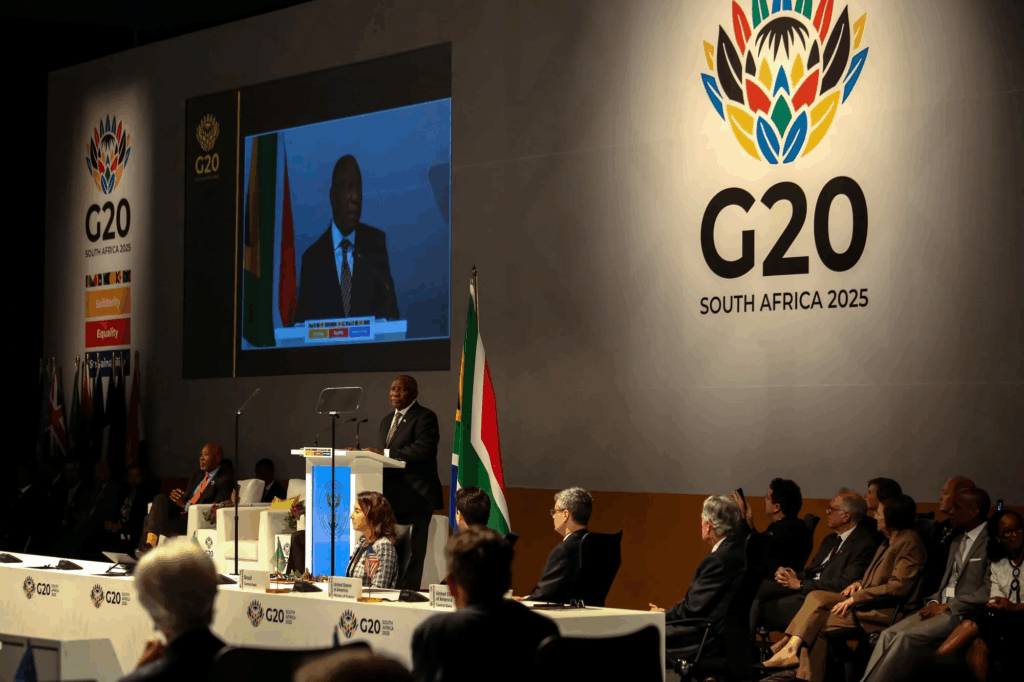
At the Energy Transitions Working Group (ETWG) Ministerial Meeting in Durban, G20 energy ministers launched a Voluntary Infrastructure Investment Action Plan to close the clean cooking gap in developing countries. They also endorsed a Handbook for Just and Inclusive Energy Transitions, recognising that the global shift to renewables must be fair, affordable, and people-centred.
These outcomes signalled growing support for energy access and equity, particularly across Africa, a continent central to the challenge and the opportunity for clean energy growth.
Meanwhile, the Finance Ministers and Central Bank Governors Meeting in Washington, D.C., underscored broader global risks, from high debt levels to geopolitical tensions, but gave limited attention to climate and energy issues. This muted emphasis revealed a lingering divide between fiscal priorities and sustainable energy financing, even as clean energy investment remains crucial to long-term stability.
Complementing these, the Infrastructure Working Group (IWG), which met in September, emphasised sustainable infrastructure as a foundation for resilient energy systems. Discussions on investment in power grids, renewable generation, and digitalisation underscored the G20’s growing role in connecting infrastructure planning with energy transition goals.
Bridging Ambition and Implementation
Despite progress, challenges persist. Many of the G20’s energy commitments remain voluntary, and tensions between developed and developing economies continue to slow consensus. Emerging economies, including those in Africa, have called for greater access to concessional finance and technology transfer to enable their transitions without jeopardising growth.

Indian Environment Minister Bhupender Yadav recently urged G20 nations to “act as a bridge between ambition and implementation”, a statement that captures the heart of the challenge. Translating ambitious communiqués into measurable progress requires financing, political will, and clear accountability.
Johannesburg Leaders’ Summit
The upcoming G20 Leaders’ Summit in Johannesburg (November 22–23, 2025) is expected to consolidate these efforts under South Africa’s leadership. Discussions will likely centre on climate finance, energy access, and sustainable infrastructure, key pillars for achieving a just and inclusive energy transition.
For countries like Nigeria and other African economies, the G20’s renewed attention to equitable transition pathways offers a vital platform. By linking policy dialogue with tangible investments in renewables, grid modernisation, and clean cooking, the G20 can help close the global energy access gap while advancing collective climate goals.