Japan’s energy transition strategy is evolving, and Africa is emerging as a central partner in that shift. At the Ninth Tokyo International Conference on African Development (TICAD 9) in Yokohama, leaders from across Africa and Japan laid out a new model of cooperation that links climate action, clean energy, and economic transformation. For Africa, the outcomes highlight opportunities and challenges in leveraging Japan’s experience and financing to accelerate its energy transition.
Japan’s Pivot: From Aid to Co-Creation
Since its inception in 1993, TICAD has served as a platform for Japan to deepen ties with Africa. However, TICAD 9 signalled a sharper pivot: away from traditional donor-recipient aid toward “co-creation”, developing solutions jointly with African partners. Tokyo’s revised development charter emphasises mobilising public and private capital for sustainable growth, a model designed to complement African Union energy targets and national transition strategies.
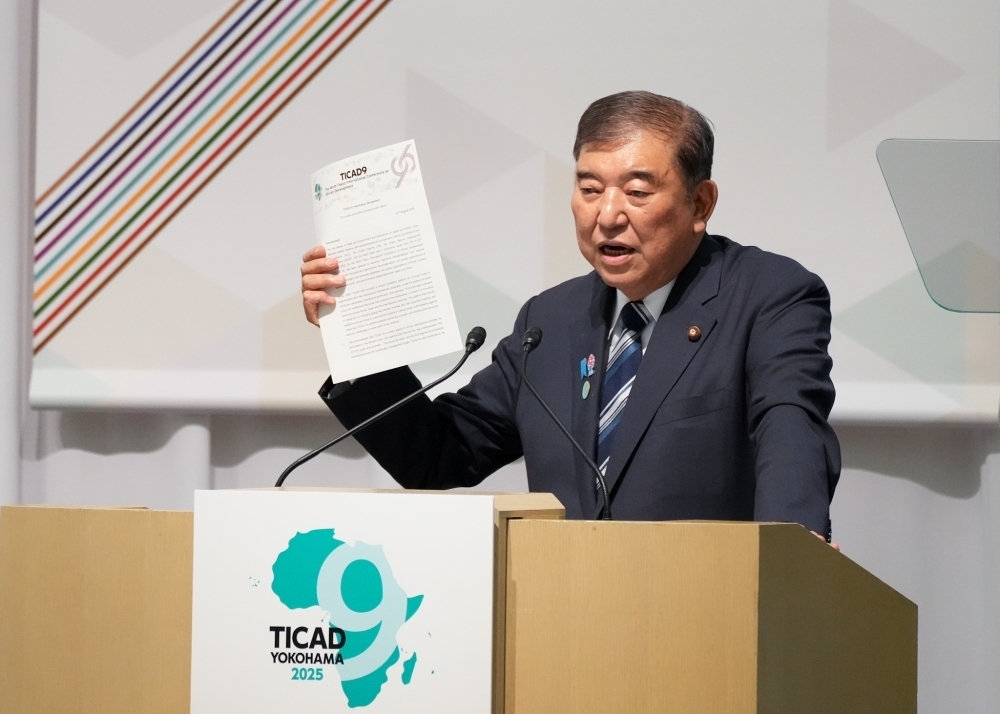
This shift reflects Japan’s domestic reality. The country is rebalancing its energy mix after the 2011 Fukushima disaster, seeking to expand renewable generation while reducing dependence on imported fossil fuels. Africa fits neatly into this strategy with its solar, wind, geothermal, and critical minerals potential.
Financing the Transition: Low-Cost, Long-Term Capital
One of TICAD 9’s major announcements was Japan’s pledge to offer concessional financing through the Nippon Export and Investment Insurance (NEXI) and the Japan Bank for International Cooperation (JBIC). The aim is to ease African countries’ access to credit for renewable energy projects and reduce reliance on higher-cost models like China’s Belt and Road Initiative.
Kenya was among the early beneficiaries, securing around $169 million in Samurai financing to boost its energy sector and reduce power distribution losses, which are estimated at 23 per cent. Such financing could be a game-changer for countries where high borrowing costs stall investment in clean energy infrastructure.
Strategic Partnership in Action with Nigeria
Nigeria represents one of Japan’s most strategic energy partnerships in Africa, given its position as the continent’s largest economy and most populous country. The relationship encompasses renewable energy development and critical minerals cooperation, with Japanese companies investing in solar and wind projects while exploring opportunities in Nigeria’s significant mineral resources. The partnership addresses Nigeria’s massive energy access challenges while supporting Japan’s supply chain diversification goals.
Japanese technology companies are working with Nigerian partners to develop distributed renewable energy solutions that provide reliable power to urban and rural communities. These solutions demonstrate scalable models that can be replicated across West Africa. Recent developments include Japanese investment in battery manufacturing facilities utilising locally sourced minerals, creating integrated value chains that benefit both economies. These projects exemplify the mutual benefit approach characterising Japan’s evolved relationship with African partners.
Geothermal and the AfDB Partnership
The Menengai geothermal project in Kenya offers a glimpse of what Japan–Africa collaboration can achieve. Backed by the African Development Bank (AfDB), JBIC, NEXI, and private players, the project is set to supply affordable, low-carbon electricity to hundreds of thousands of households. It also demonstrates how multilateral financing can de-risk private investment in energy markets, a model Japan is keen to replicate across Africa.
Japan Invests in Skills and Digital Transformation
TICAD 9 went beyond financing physical infrastructure. Japan pledged to train 30,000 African AI experts and proposed creating an Indian Ocean–Africa economic zone to strengthen regional supply chains. For Africa’s energy sector, this focus on digital transformation could be critical in scaling smart grids, improving energy efficiency, and managing demand in increasingly decentralised systems.
Notably, TICAD 9 featured a youth-led declaration for the first time, underscoring a generational shift in how energy and development policies are shaped. Japan aligned its strategy with Africa’s demographic realities by placing innovation and youth leadership at the center of its agenda.
Mutual Benefits Analysis: What Each Side Gains
The Africa-Japan energy partnership represents a sophisticated example of how countries with complementary resources and capabilities can create mutually beneficial relationships that advance development and climate goals. For Japan, African partnerships provide access to critical minerals needed for batteries, electric vehicles, and renewable energy technologies, diversified supply chains that reduce dependence on any single source, and new markets for Japanese clean energy technologies and expertise.
Furthermore, green hydrogen surfaced as a future area of cooperation. African nations like Namibia and South Africa are already advancing hydrogen strategies, and Japan, a pioneer in hydrogen technology, could become a key partner in scaling these initiatives.
African partners gain from these relationships through technology transfer that builds local industrial capacity, foreign direct investment that creates employment and economic growth, and access to advanced renewable energy technologies that can accelerate energy access and economic development.
The partnerships also provide African countries with alternatives to traditional extractive relationships, enabling them to capture more value from their natural resources. The mutual benefit model extends beyond immediate economic gains, including strategic advantages for both sides. Japan strengthens its energy security while building soft power relationships that enhance its global influence. African partners gain access to patient capital and long-term technological partnerships that support sustainable development goals while building industrial capabilities.
The Japan-Africa energy partnership creates positive incentives for accelerated clean energy deployment by aligning decarbonisation goals with economic development objectives.
What this Means for Africa
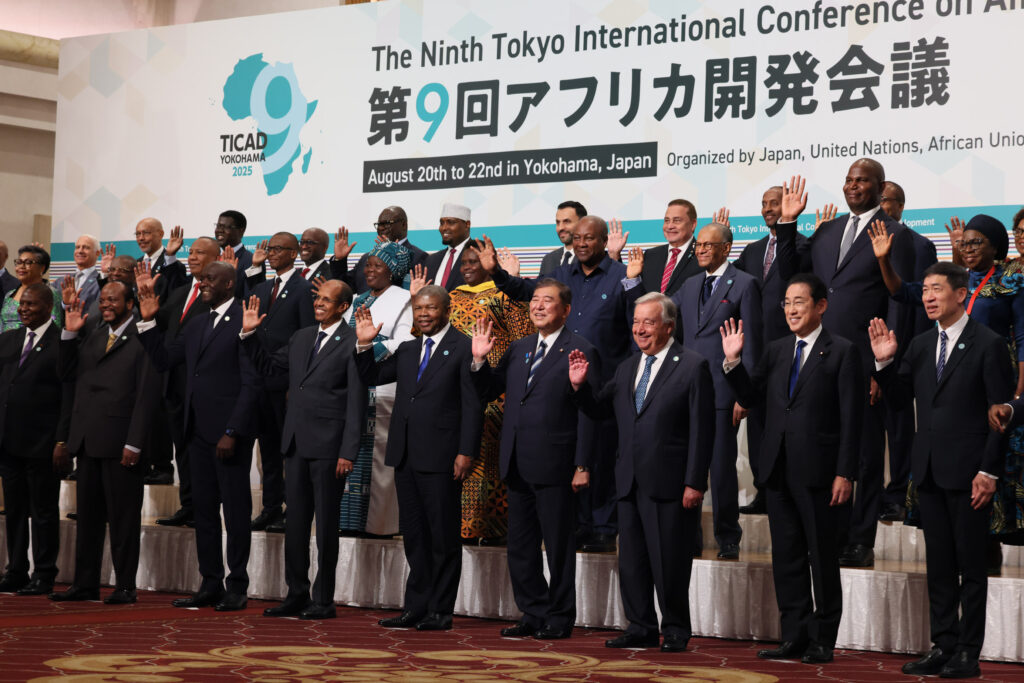
Japan’s approach offers African countries lower-cost finance, cleaner technologies, and new skills. It also contrasts with debt-heavy deals that burden national budgets. These partnerships can help African states leapfrog into smarter, greener energy systems if implemented well.
Japan’s investments are still modest compared to those of China or the European Union. African governments must align TICAD projects with Agenda 2063 and their national Just Energy Transition Plans to deliver real impact. Otherwise, Japan’s commitments risk staying symbolic.
In conclusion, Japan is still navigating its energy transition, but TICAD 9 proves that Africa will shape that journey. Japan is betting on Africa’s role in the future of global energy through geothermal power, AI training, concessional loans, and partnerships in critical minerals.
For Africa, the task is clear: seize these opportunities, insist on fairness, and ensure local priorities drive the agenda. If both sides succeed, Japan and Africa will co-create a new model of global energy cooperation, one built on shared transition, not dependency.