For decades, Nigerian universities have struggled with a persistent and unreliable power supply, characterised by frequent power shortages. The consequences go beyond dark lecture halls.
Research activities are frequently disrupted, university teaching hospitals operate under suboptimal conditions, and administrative processes often come to a halt during power outages. These tertiary institutions have resorted to polluting diesel generators, a solution as costly as it is unsustainable.
According to the “Scaling up University Electrification in Nigeria” report, as of 2016, several schools and universities lacked sufficient power to provide uninterrupted lessons on their campuses. As a result, some universities even had to close partially. But a quiet revolution has been underway.
In 2016, through the Rural Electrification Agency (REA), the Federal Government of Nigeria launched the Energising Education Programme (EEP) under the Nigeria Electrification Project to deliver dedicated captive solar hybrid power systems to 37 Federal Universities and seven University Teaching Hospitals nationwide.
This initiative, implemented in three phases, enables private-sector-led projects to deliver sustainable solutions for powering Nigerian campuses.
Five solar engineering, procurement and construction (EPC) companies—Em-One Energy Solutions, Znshine PV-Tech Co. Ltd, Dongfang Electric International Corporation, DEC & Mutual Commitment Company Ltd, Eauxwell Nigeria Ltd—secured procurement in the Phase II contract.
In 2024, REA signed another agreement with five renewable energy service companies (A4&T Power Solutions, Privida Power Limited, Skipper Nigeria Limited, Eauxwell Nigeria Limited, and Havenhill Synergy Limited) to facilitate the delivery of 1,265 MW of distributed renewable energy (DRE) projects, targeting electrification in peri-urban and rural areas, including markets, businesses, households, public institutions, health clinics, and schools.
One of the companies at the core of this transformation, consistently engaged in delivering power to universities in Nigeria, is Eauxwell Nigeria Limited. Due to the company’s exceptional work, REA contracted Eauxwell for Phases II and III of the EEP. With over 150 megawatts (MW) of solar capacity installed across Africa and a suite of flagship projects targeting Nigerian universities, Eauxwell shows what’s possible when technical expertise meets strategic vision.
The company’s journey and the implications for Nigeria’s energy and education sectors are reshaping the narrative and setting new standards through its pioneering work.
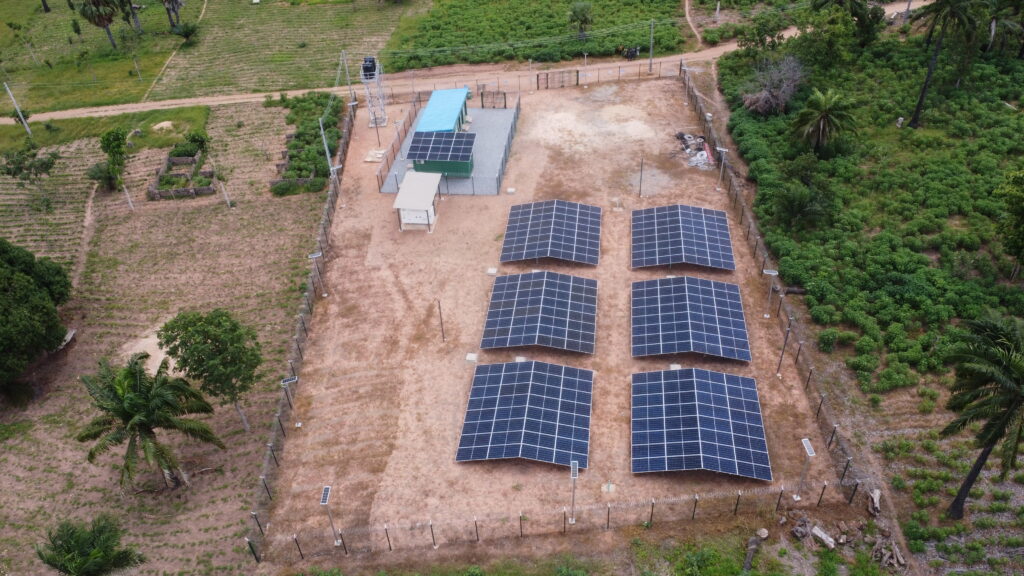
Eauxwell, a leading Nigerian solar Engineering, Procurement and Construction (EPC) firm, began as a water engineering company dedicated to solving water access challenges in Nigeria. For nearly two decades, it helped deliver potable water to communities nationwide. By 2005, facing the crippling effects of Nigeria’s erratic power supply on its operations, the company made a bold pivot to integrate solar water pumping into its systems.
This step soon became a launchpad into a bigger vision. Within a year, Eauxwell expanded into solar photovoltaic (PV) and battery energy storage systems, recognising the country’s massive power needs and the vast market potential in the renewable energy sector. The company has since evolved into a full-service solar EPC firm, providing solutions across Nigeria and other parts of Africa.
Eauxwell delivers large-scale solar PV projects, Battery Energy Storage Systems (BESS), hybrid power projects, mini-grids, and commercial and industrial (C&I) installations. As of 2025, the company boasts:
- Over 150 MWp of installed solar PV capacity
- 240+ MWh battery storage projects
- More than 200 full-time staff
Powering Knowledge
Universities are mini-cities. They operate research laboratories, hospitals, residential halls, water treatment systems, and administrative offices, which require uninterrupted power. Eauxwell’s intervention in this space is not only timely but transformative.
Here’s a breakdown of its top four utility-scale university projects:
1. Federal University of Agriculture, Abeokuta (FUNAAB)
- Capacity: 3.4 MWp hybrid solar system with 2 MW BESS
- Diesel Backup: 4 x 1,000kW
- Funded by: World Bank, through REA under EEP
This project, launched in December 2022, features over 6,000 solar panels and 300 solar-powered streetlights, as well as four 1,000 kW diesel backup generators that cover academic blocks, administrative buildings, staff quarters, and even the university zoo. Notably, Eauxwell’s design ensures power reaches both core academic areas and extended parts of the campus, creating a template for holistic campus electrification.
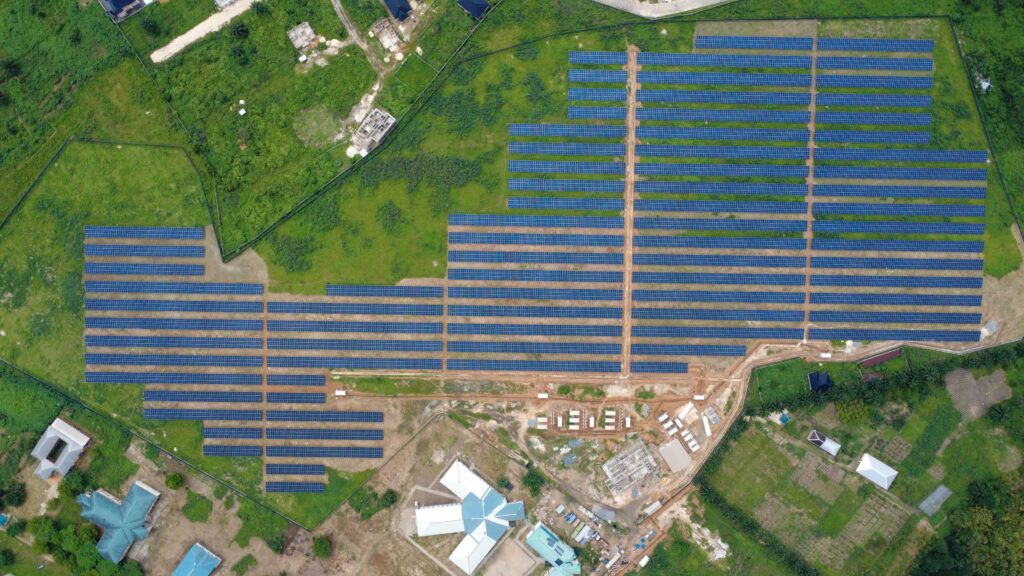
2. University of Port Harcourt (Uniport)
- Capacity: 10.8 MWp with 20MWh of BESS
- Diesel Backup: 5.5 MVA
- Funded by: African Development Bank under the EEP
This project, currently undergoing cold commissioning—the final phase before full operation—has reached mechanical completion. Scheduled for completion in 2026, it represents one of Nigeria’s largest hybrid solar energy projects with a 10km 33kV transmission line. This project powers Uniport and its teaching hospital.
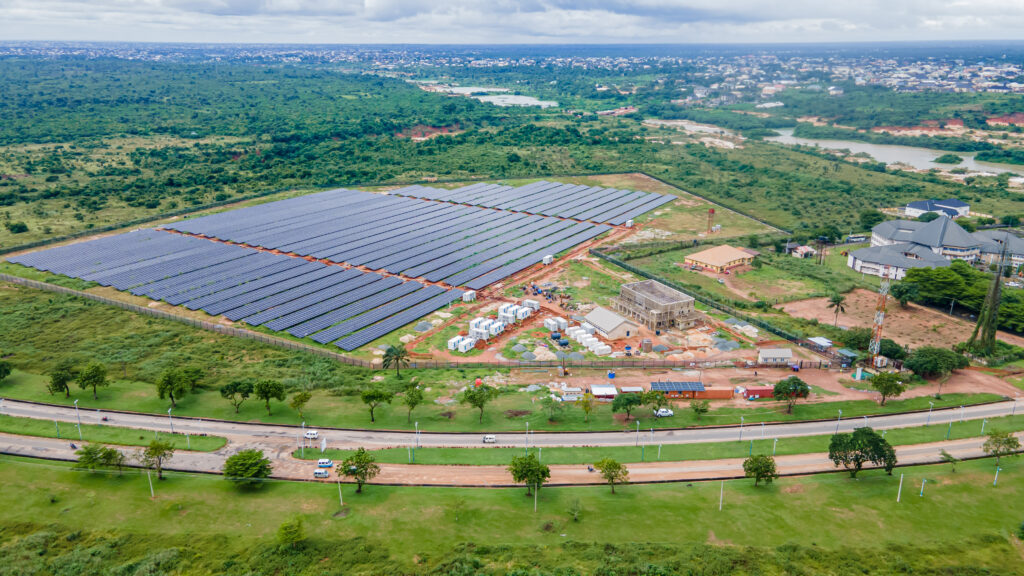
3. Federal University of Technology, Owerri (FUTO)
- Capacity: 8.5 MWp with 17 MWh of BESS
- Diesel Backup: 3.75 MVA
- Funded by: African Development Bank, through REA under EEP Phase III
Located in southeastern Nigeria, this system features a 25km 33kV distribution line tailored to FUTO’s needs, taking into account the region’s unique climate and grid challenges. Once completed, the plant will provide an uninterrupted power supply to the university’s research labs and IT-intensive departments, fostering innovation and ensuring stable academic operations.
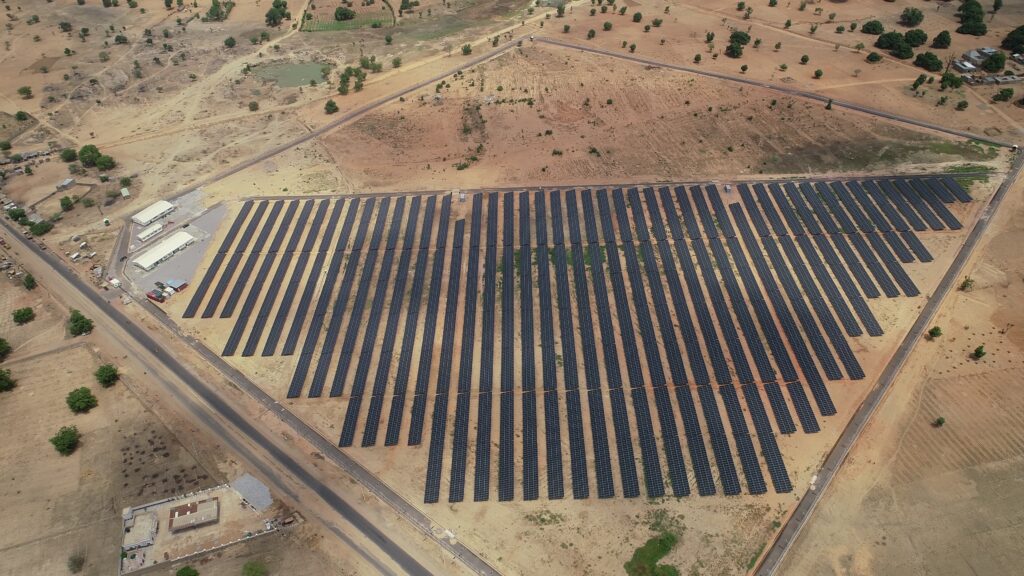
4. University of Uyo (UNIUYO)
- Capacity: 3 MWp solar hybrid system with 8 MWh BESS
- Diesel Backup: 1.75 MVA diesel generators
- Funded by: African Development Bank, through REA under EEP Phase III
This project is located at the university’s Nwaniba permanent site.
Eauxwell’s Focus on Bankability and Scalability
Securing funding for multi-million-dollar infrastructure is no small feat. This is one of the significant challenges many solar EPC firms face. However, Eauxwell has created a replicable model for financial and operational success. Here’s what sets them apart:
1. Institutional Collaboration and Strategic Partnerships
Eauxwell prioritises collaboration and partnership with credible institutions, such as the Rural Electrification Agency, the African Development Bank, and the World Bank. Eauxwell attracts investors globally by reducing the perceived risk for investors and lenders in frontier markets. These partnerships and collaborations have helped the company deliver top-quality projects without financial constraints or unfavourable regulations.
For instance, REA’s involvement helps navigate Nigeria’s complex regulatory environment, while the World Bank provides the financial requirements. These alliances reduce project risk, unlock concessional funding, and streamline regulatory approvals, key ingredients for securing investor confidence and long-term financing.
2. Focus on Reliability, Not Just Generation
Eauxwell’s hybrid system approach ensures that projects are reliable and effective. The company combines solar PV with substantial battery storage and backup generators, guaranteeing reliability and continuous power availability. This design attracts governments and institutional clients to partner with Eauxwell and invest in their projects.
3. Scaling for Efficiency
Larger installations reduce per-unit costs for equipment, installation, and maintenance, while generating sufficient power to serve campuses and multiple offtakers. Operating at 10+ MWp utility scale has enabled the company to offer competitive pricing and sustainable energy solutions. This approach attracts both clients and financiers to work with Eauxwell.
4. Technical Excellence and Local Capacity Building
With over 200 employees and decades of engineering experience, Eauxwell brings technical credibility that reassures investors. The firm doesn’t just install equipment; it also integrates knowledge transfer through training programmes like the STEM initiative at FUNAAB.
This strategy empowers Nigerian engineers and technicians, reduces maintenance costs, and ensures sustainability. This investment in local capacity ensures that projects can be maintained effectively, reduces long-term operational risk, and creates a skilled workforce for Nigeria’s growing renewable energy sector, all of which reassures financiers and donors.
5. Diversified Client Portfolio
Eauxwell’s projects serve multiple clients, including private developers, distribution companies, universities, industrial complexes, and communities. This diversification spreads risk across sectors with different investors and/or clients. Additionally, the company’s history in water engineering enables it to cross-sell solutions, fostering deeper client relationships and multiple revenue streams.
Nigeria’s Renewable Future Begins on Campus
Eauxwell has developed a sustainable business model that delivers value to investors, clients, and the communities it serves. They have also shown that partnerships and collaboration among stakeholders will boost growth in renewable energy.
As Nigerian campuses get powered up, Eauxwell’s projects demonstrate that energy access and financial viability are possible with the right approach and strategies. Eauxwell’s focus on universities, which are centres of knowledge, innovation, and human capital development, is not just electrifying buildings; it’s energising futures.