The 30th Conference of the Parties (COP30) of the United Nations Framework Convention on Climate Change (UNFCCC) is set to take place in Belém, Brazil, from November 10 to 21, 2025, marking the first time the Amazon region will host the premier international climate forum.
Having announced his country’s candidacy during COP 27 in Sharm El Sheikh, Egypt, in 2022, Brazilian President Luiz Inácio Lula da Silva saw his bid become official in January 2023.
Soon after the approval, the South American country began preparations by appointing diplomat André Corrêa do Lago as COP president in January 2025 to steer negotiations during the climate conference.
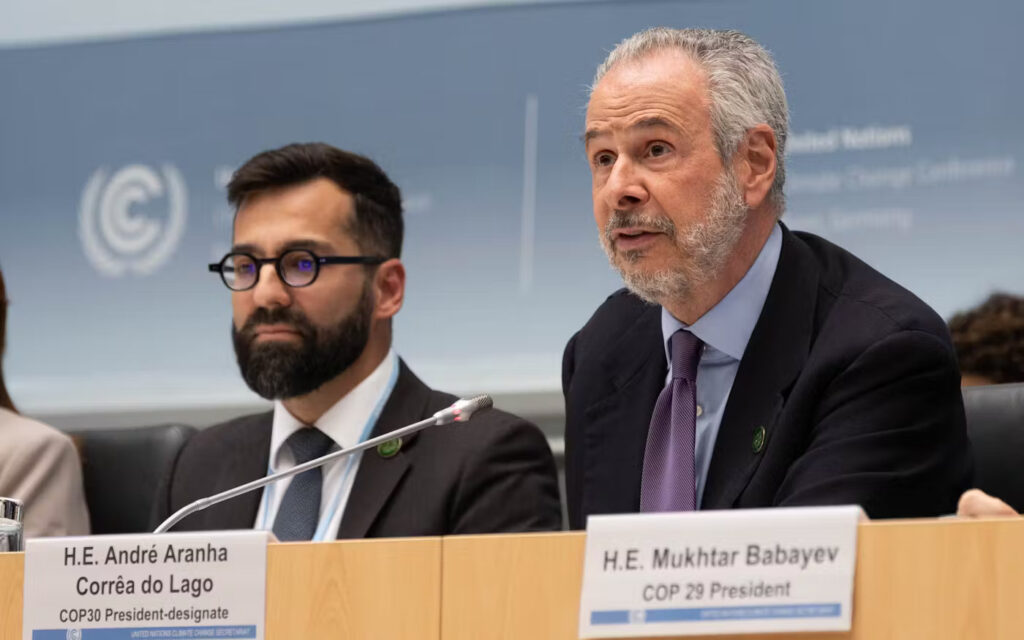
With less than a few hours until the highly anticipated conference, key players, stakeholders, participating countries, and media are all set for what many consider the most critical climate conference since the Paris Agreement was adopted in 2015.
In anticipation of the landmark event, this report provides an in-depth overview of UNFCCC, starting with the history and relevance.
UNFCCC COP 30: Meaning, History, and Relevance
The United Nations Framework Convention on Climate Change (UNFCCC) is the United Nations’ process for negotiating agreements to mitigate climate change. It’s a global agreement among countries to limit the harmful human activities that impact the climate system and provide a healthy environment for people worldwide.
The history of the UNFCCC can be traced back to 1992, when it was first signed by 154 states at the United Nations Conference on Environment and Development (UNCED). In 1995, the first Conference of the Parties was held in Berlin, where participating countries negotiated to strengthen the global response to climate change.
Two years after the dialogue, the Kyoto Protocol was introduced to legally bind developed country Parties to emission reduction targets.
The Protocol’s first commitment period lasted from 2008 to 2012, while the second commitment timeframe was 2013 to 2020. The UNFCCC currently has 197 countries (also referred to as Parties) that are expected to attend the upcoming global convention, while 192 Parties are committed to the Kyoto Protocol.
Meanwhile, COP 30 encompasses the 30th session of the Conference of the Parties (COP 30), the 20th meeting of the COP serving as the Meeting of the Parties to the Kyoto Protocol (CMP 20), and the seventh meeting of the COP serving as the Meeting of the Parties to the Paris Agreement (CMA 7).
UNFCCC COP 30: Objectives and Agenda
Brazil has reportedly highlighted three objectives for this year’s edition of the summit. The first aims to reinforce cooperation amid growing geopolitical tensions between countries. The second is to connect climate change to individuals and demonstrate the benefits of climate action, while the third objective is to accelerate the submission of Nationally Determined Contribution (NDC) commitments.
Similarly, the conference will feature a six-action agenda covering more than 10 interconnected themes, including Energy, Industry & Transport; Forests, Oceans & Biodiversity; Agriculture & Food Systems; Cities, Infrastructure & Water; Human and Social Development; and Cross-cutting issues.
During the first and second days (November 10 and 11), participants will discuss adaptation, cities, infrastructure, and water. November 12 and 13 will see them focus on health, jobs, education, culture, justice and human rights.
November 14 and 15 are primarily dedicated to addressing issues related to systems transformation across Energy, Industry, Transport, Trade, and Finance. The last days of the event will focus on issues concerning Women, Gender, and Afrodescendants.
Meanwhile, recent reports have revealed Brazil’s intention to launch the Tropical Forest Forever Facility as its signature achievement during the conference. The $125 billion blended-finance investment fund is designed to reward forest conservation in tropical countries.
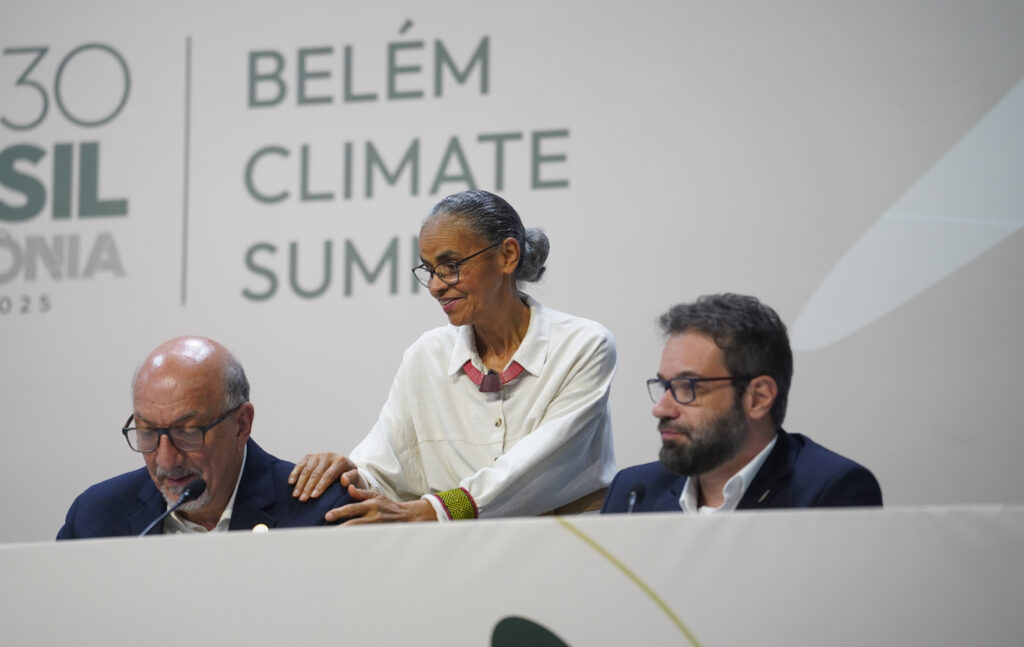
Understanding Nationally Determined Contributions (NDCs)
Nationally Determined Contributions (NDCs) are national climate action strategies that outline how countries plan to reduce greenhouse gas emissions and adapt to the impacts of climate change.
These NDCs form the foundation of the Paris Agreement and serve as the main vehicle for countries to collectively reduce emissions and limit global warming to well below 2°C, preferably 1.5°C, compared to pre-industrial levels.
Unsurprisingly, NDC discussions will be an integral part of the COP 30 event, as countries will provide an account of their progress in committing to the Paris Climate Agreement. During the event, countries that are yet to submit their NDCs are expected to do so.
Global NDCs Submission Status: Unimpressive Turn Up And Financial Requests
Eyebrows have been raised over global cooperation in the fight against climate change as many countries failed to submit their NDCs before the February 2025 deadline.
Only 15 countries met the deadline, including Andorra, Brazil, Ecuador, New Zealand, Saint Lucia, Switzerland, United Arab Emirates, United Kingdom, United States, and Uruguay.
By October 17, 2025, the number rose to 62 countries, representing around 30% of global greenhouse gas emissions.
While the increased submissions represent a step in the right direction, they fall short of the ambition needed to keep Paris Agreement goals within reach.
Meanwhile, among the 61 countries with new NDCs, 29 developing countries reported specific financial requirements totalling $1.9 trillion. The largest increases came from Angola, which raised its request from $44 billion to $412 billion, and Pakistan, which increased its needs from $241 billion to $565 billion.
More than half (56 per cent) of the 2035 NDCs submitted are conditional on international finance, technical assistance, or some other form of support.
Regional Analysis: Continental Commitments
Africa: High Ambition But Limited Resources
Africa has demonstrated remarkable commitment to climate action despite low contribution to global emissions. Fifty-three of 54 African countries have submitted their first round of NDCs, with several submitting updated versions.
The continent introduced Africa’s first NDC implementation Index, covering 12 Sub-Saharan countries. These include Botswana, Côte d’Ivoire, Ethiopia, Ghana, Kenya, Namibia, Nigeria, Sierra Leone, Tanzania, Uganda, Zambia, and Zimbabwe.
Pledges from African countries have been encouraging as they are more robust than the global average. In October 2025, Zimbabwe, Botswana, Lesotho, Nigeria, and Ethiopia had submitted updated NDCs.
However, the financial gap in Africa remains staggering because the continent receives only 20% of global climate adaptation finance, which is well below the $3 trillion required to deliver on their recently updated NDCs.
Many African nations face limited fiscal space, high debt burdens, and competing development priorities, making it difficult to allocate resources toward long-term climate goals.
Weak climate finance targets agreed at COP 29 exacerbated these challenges, leaving developing nations with insufficient support to implement their ambitious plans.
The Americas: Leadership But Uncertainty
Unlike African nations, the Americas present a complex picture of climate commitment.
The United States submitted its NDC but announced its intention to withdraw from the Paris Agreement effective January 2026—a move that could influence other countries’ participation.
Canada, one of the G20 countries that submitted new NDCs, has demonstrated continued commitment despite domestic political challenges.
Brazil has emerged as a regional climate leader, committing to a 59-67% economy-wide reduction from 2005 levels by 2035 and reaffirming its commitment to end deforestation by 2030.
Central America and Caribbean nations, including Ecuador and Uruguay, demonstrated their unwavering commitment by beating the February deadline.
Understandably, just as with African nations, these countries are vulnerable to the threats from climate change.
Europe: Leading By Example
Europe continues to demonstrate climate leadership through multiple pledges, new environment-friendly policies, and NDC commitments. The United Kingdom pledged an 81% reduction of greenhouse gas emissions from 1990 levels by 2035, while Norway promises a 70-75% reduction.
Switzerland, Andorra, and Norway met the February deadline, while Russia submitted a plan for a 65-67% reduction from 1990 levels and carbon neutrality by 2060. Likewise, the European Union proposed raising its ambition from 55% to 66-72%, pending member state approval.
However, at the time of this report, the EU had not provided a date for NDC submission ahead of COP 30.
Asia: The Critical Question Mark
Asia is home to the world’s largest emitters and fastest-growing economies, making its commitment essential to global success.
Japan submitted its NDC among major emitters, along with the United Arab Emirates and Singapore. However, despite their role as significant gas emitters, China and India had not submitted as of October 2025.
China contributes 30.1% of contemporary global greenhouse gas emissions, while India generates 7% of global emissions. Hence, both countries must increase their commitment so the world can achieve the 2035 target.
Indonesia, another significant emitter in Southeast Asia, also remained in the consultation phase, along with Mexico and the Republic of Korea.
Oceania: Small but Significant Contributions
While some European countries didn’t meet the deadline, Australia and New Zealand have both submitted updated NDCs, with Australia pledging a 62-70% reduction from 2005 levels.
Just like African countries, the Pacific Island nations are vulnerable to the threats from sea-level rise. Henceforth, they have demonstrated top-notch commitment while consistently advocating for the highest ambition.
UNFCCC COP 30: The Expectations
Key deliverables expected at COP 30 include complete NDC submissions from all parties, especially major emitters, and a UNFCCC synthesis report assessing new pledges.
The conference must reignite commitments to fossil fuel phase-out, tripling renewables, doubling energy efficiency, phasing down unabated coal, transitioning away from fossil fuels, and phasing out inefficient fossil fuel subsidies.
The conference should convince key players still in the consultation phase—notably the EU, China, Japan, Australia, Indonesia, and Mexico—to swiftly join in the mission to prevent global warming and other environmental issues.
Conclusion
COP 30 represents more than another climate conference. It is potentially the last opportunity to prevent the 1.5°C goal from becoming just another unachievable target.
The conference will test whether the international community can overcome geopolitical tensions, economic pressures, and political challenges to address a significant threat to human lives.
Countries that have not submitted NDCs must do so, while others should raise the ambitions of their commitments.
Enhanced climate finance and technology transfer are crucial for developing nations to implement their plans. Multi-level action from cities, businesses, and regional governments must complement national efforts.
As the key players prepare for the much-discussed global conference, the world watches Belém with a mixture of hope and anxiety. COP 30 must deliver not just promises but a credible pathway to a livable future.