Nigeria’s push to localise renewable energy manufacturing gained fresh momentum at the Nigeria Renewable Energy Innovation Forum (NREIF) 2025, held in Abuja on 14–15 October. The two-day forum, organised by the Rural Electrification Agency (REA) in partnership with the National Agency for Science and Engineering Infrastructure (NASENI) and supported by the Alliance for Rural Electrification (ARE), gathered stakeholders from across government, industry, and the private sector to accelerate the country’s transition from energy consumer to clean energy producer.
Driving the “Nigeria First” Vision
Vice President Kashim Shettima reaffirmed the Federal Government’s commitment to transforming Nigeria into Africa’s renewable energy hub. He underscored that local manufacturing must sit at the heart of this transition, not only as a matter of industrial strategy but as a means to create jobs, stabilise the naira, and ensure long-term energy security.
“Our goal is not just to install renewable energy systems,” Shettima stated. “It is to build them here, from the solar panels to the batteries that power our communities.”
This vision aligns with the administration’s Renewed Hope Agenda, which seeks to strengthen the domestic value chain for solar modules, batteries, and smart meters while fostering public–private partnerships that can turn Nigeria’s manufacturing potential into tangible output.
Key Stakeholders Shaping the Conversation
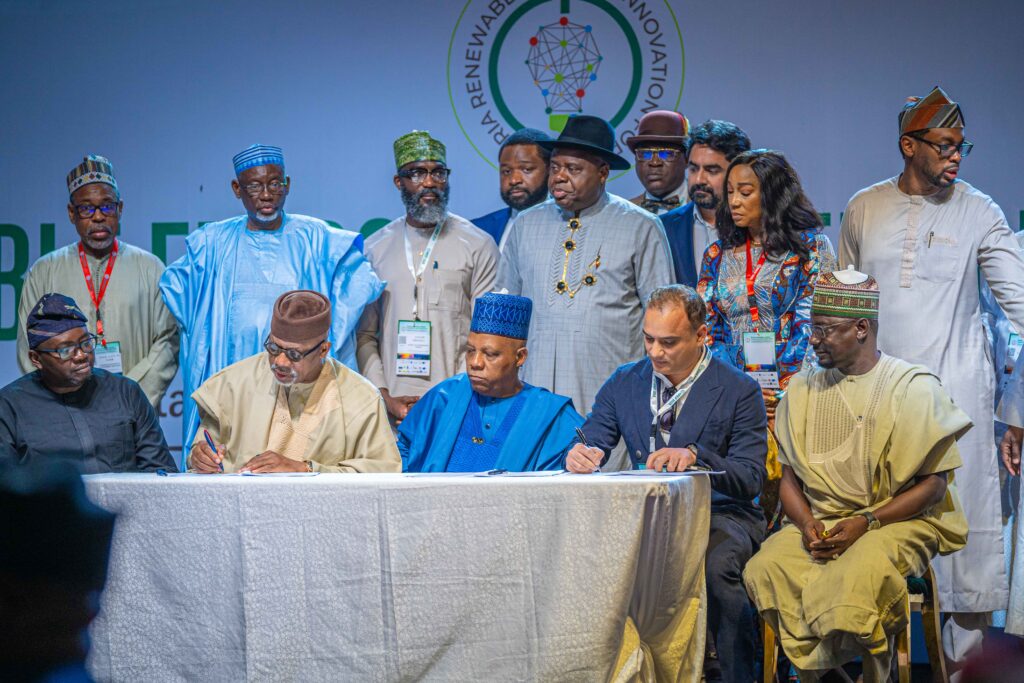
Rural Electrification Agency (REA): As organiser and secretariat, the REA framed NREIF 2025 around policy-to-practice outcomes. It presented updates on national anchor programmes, including the National Public Sector Solarisation Initiative (NPSSI) and the Distributed Access through Renewable Energy Scale-up project (DARES), designed to stimulate local manufacturing through large-scale solar deployment.
National Agency for Science and Engineering Infrastructure (NASENI): NASENI’s role at the forum was symbolic and practical. Its presence demonstrated that Nigeria already has the technical base to drive indigenous production. Through its ongoing research, engineering design, and manufacturing programmes, NASENI continues to pioneer locally made solar home systems, panels, inverters, and batteries, which is concrete proof that Made in Nigeria renewable technologies are not a distant aspiration.
Federal Ministry of Power (MoP): The Honourable Minister, Adebayo Adelabu, launched two key instruments at the forum: the Nigerian Green Manufacturing Investment Prospectus and the REA Harmonised Technical Standards. These instruments guide investors, clarify quality benchmarks, and formalise local-content pathways.
Federal Ministry of Industry, Trade and Investment (FMITI) and Nigerian Investment Promotion Commission (NIPC): Both institutions are committed to aligning fiscal incentives, trade measures, and investor engagement strategies with renewable manufacturing objectives, signalling stronger policy coherence.
Private Sector Partners: Local and international players, including Sun King, Hinckley Recycling Ltd, and members of the Solar Energy Manufacturers and Assemblers Association (SEMA), showcased business models and technologies that reinforce domestic value-chain development and circular-economy integration.
State Governments: State governments also took centre stage, pledging to champion renewable industrial clusters that promote manufacturing and energy access at the subnational level. Their involvement underscores the shared responsibility of building Nigeria’s renewable energy economy from the ground up.
Exhibition Spotlight: From Display to Factory Floor
Beyond the policy discussions, the exhibition hall at NREIF 2025 vividly demonstrated Nigeria’s emerging manufacturing capacity. Rows of booths showcased locally developed products, solar modules, batteries, irrigation systems, and energy management tools, evidence that the country is already moving from concept to production.
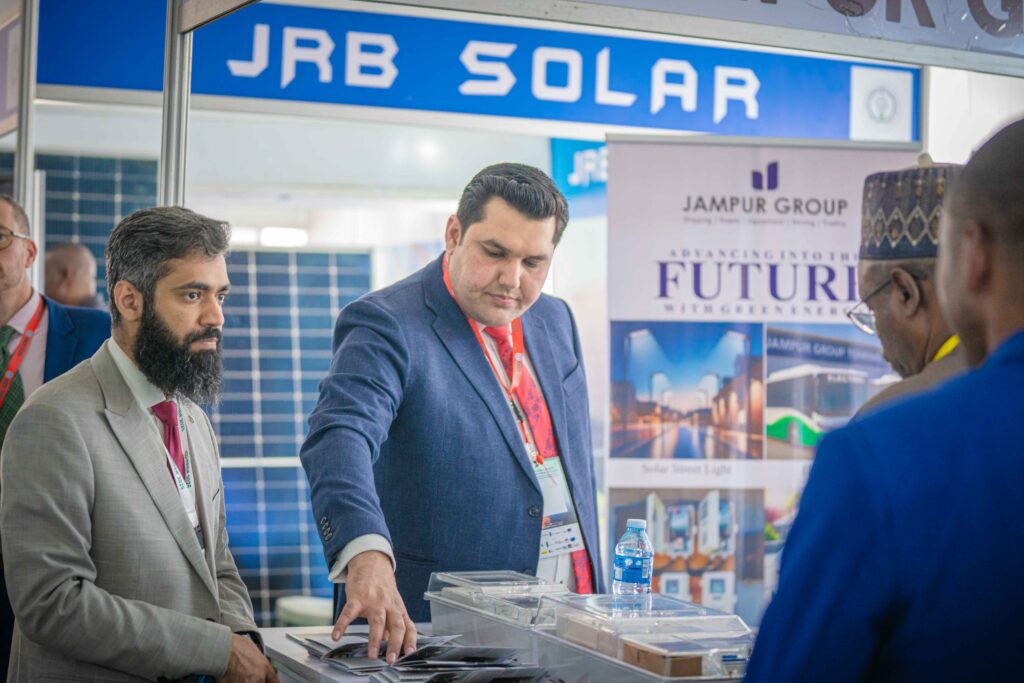
At the heart of the exhibition was NASENI’s display of state-of-the-art renewable energy technologies, including solar home systems, portable solar units, and solar-powered irrigation systems. The Minister of Power, Adebayo Adelabu, who toured the NASENI booth, emphasised that the future of clean energy in Nigeria must be designed, assembled, and built in Nigeria.
In addition, the exhibition floor buzzed with cross-sector collaboration, investors exploring partnerships, engineers explaining design processes, and government officials engaging with manufacturers on policy alignment. Local firms displayed innovation and craftsmanship, while foreign OEMs sought joint ventures and technology transfer opportunities.
Furthermore, the exhibition turned Nigeria’s manufacturing narrative from abstract policy to tangible proof. What stood on display was not just energy hardware, but the future of industrial self-sufficiency.
“The exhibition may have lasted two days,” one participant noted, “but it represents decades of progress in motion; what’s displayed here today will be rolling off factory lines tomorrow.”
Notable Projects and Agreements Signed
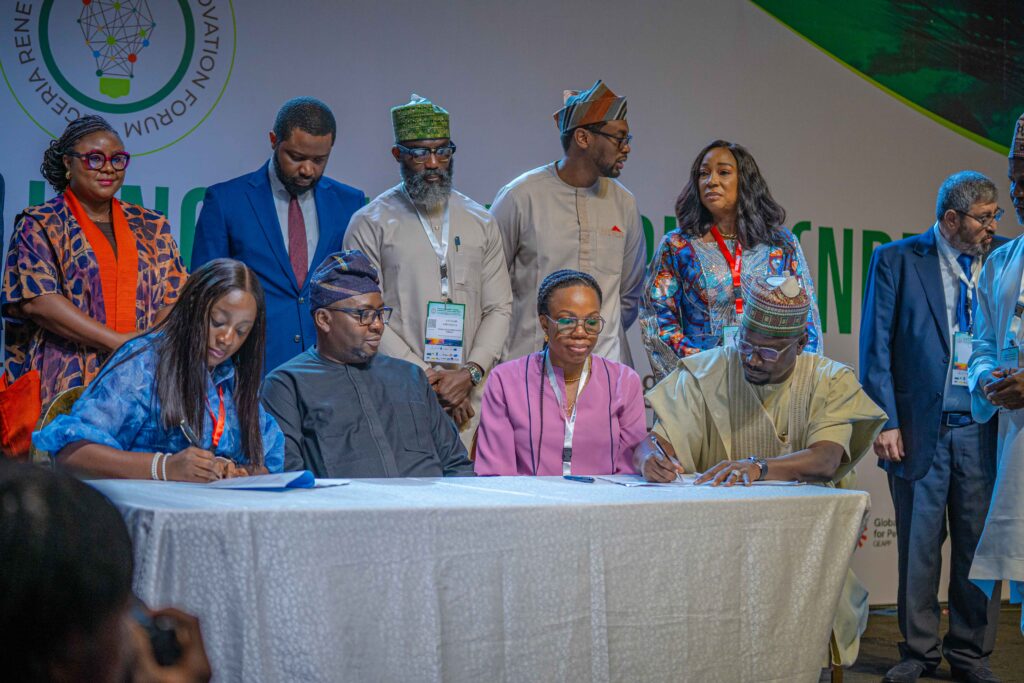
The forum’s Deal Room produced tangible results. According to the official communiqué, over USD 435 million in investment commitments were secured, alongside a series of strategic MoUs aimed at deepening local manufacturing:
- REA × Six State Governments (Lagos, Ogun, Akwa Ibom, Kano, Bayelsa & FCT):
Partnerships to deliver renewable energy manufacturing clusters and localised deployment projects, with a combined initial capacity target of 4,000 MW. - 1 GW Solar Panel Manufacturing Facility (REA, InfraCorp & Solarge BV):
A joint venture initiative was announced to establish a 1 gigawatt solar-panel plant with a 50 per cent local-content target within three years, positioning Nigeria as a regional production centre. - Sun King × REA Light Manufacturing Agreement:
Commitment to establish a Nigerian footprint for solar appliances and efficient lighting systems, complementing ongoing rural-electrification projects. - Private-sector commitments:
Several local companies pledged to localise smart-meter and battery-recycling operations, while Hinckley Recycling Ltd underscored plans to integrate e-waste recovery into Nigeria’s renewable manufacturing policy.
Next Steps: Turning Commitments into Capacity
Meanwhile, with the policy momentum, partnerships, and investment interest now building, stakeholders outlined a clear roadmap for the post-NREIF era. Forum participants adopted a collective resolution to:
- Prioritise local-content obligations across all renewable programmes.
- Scale green-finance instruments such as blended-finance vehicles, green bonds, and carbon-credit mechanisms.
- Expand vocational and apprenticeship programmes around manufacturing clusters.
- Pursue regional export strategies to position Nigeria as a supplier of renewable-energy components within ECOWAS.
- Institutionalise digital data platforms to improve procurement transparency and investor confidence.
As the communiqué puts it, “The transition from pilot projects to industrial scale requires urgency, coordination, and measurable commitments.”
Conclusion: From Vision to Value
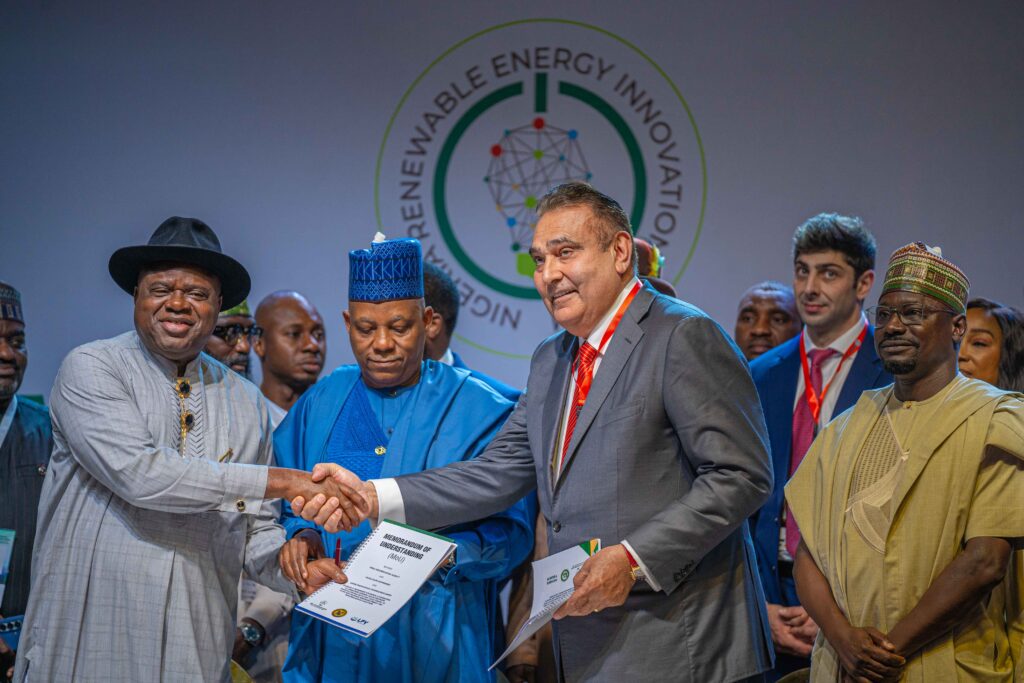
The Nigeria Renewable Energy Innovation Forum 2025 bridged the gap between ambition and execution, between showcasing innovation and manufacturing it at scale. With a 1 GW solar-manufacturing joint venture, six state-level partnerships, and over $435 million in new investment pledges, the foundations of a Made in Nigeria Energy Revolution are being laid.
If the implementation roadmap stays on course, the following forum in 2026 may well showcase Nigeria as a market for renewable technologies and Africa’s leading manufacturer and exporter of clean energy solutions.