- The Trump administration will skip COP30, sending no top U.S. officials and citing its focus on “energy security” over global climate goals.
- The move leaves China, the EU, and local leaders, such as Gavin Newsom, to drive climate talks in Brazil.
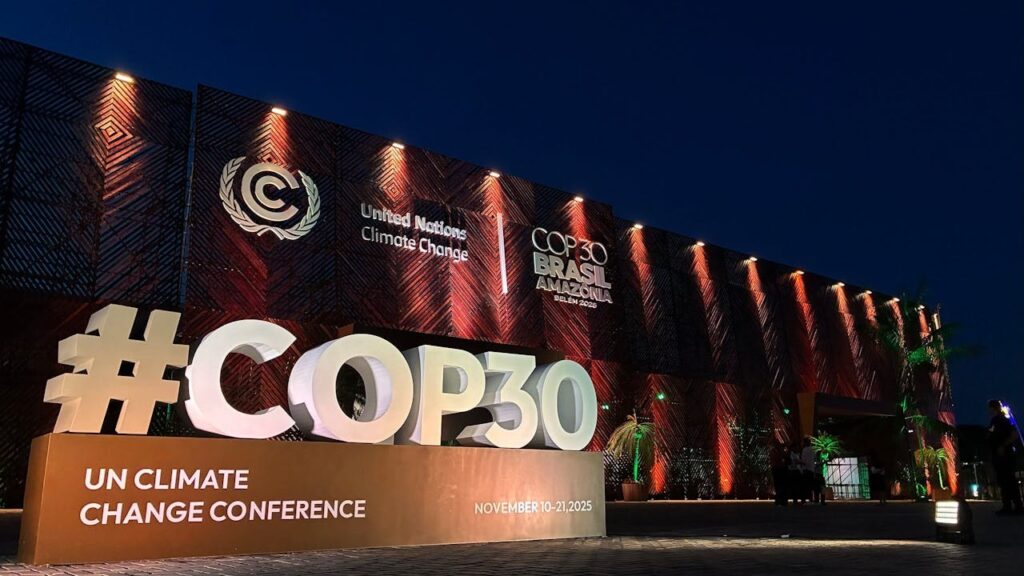
The world’s biggest climate summit will open next week without one of its most powerful players. The United States will skip COP30 in Belém, Brazil, after the White House confirmed that no senior officials will attend the conference.
The move marks a new chapter in President Donald Trump’s rejection of multilateral climate cooperation. It follows his decision earlier this year to withdraw the U.S. from the Paris Agreement, a cornerstone of global efforts to limit the temperature rise.
The White House Decision
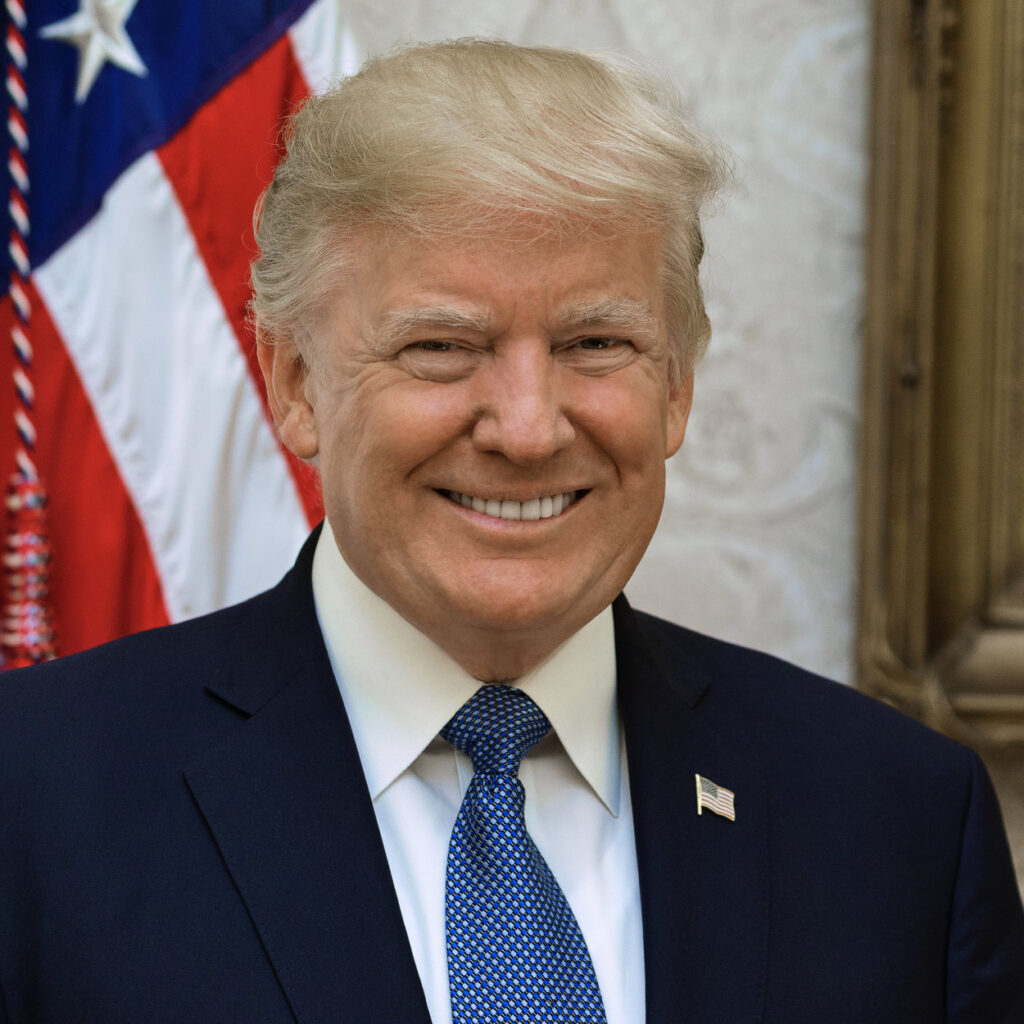
A White House official mentioned that the president remains “directly engaged with global leaders on energy issues” through what the administration calls “historic trade and peace deals” centred on energy partnerships.
“President Trump will not jeopardise our country’s economic and national security to pursue vague climate goals that are killing other countries,” said White House spokesperson Taylor Rogers. “The Green New Scam would have killed America if President Trump had not implemented his commonsense energy agenda, focused on utilising the liquid gold under our feet to strengthen grid stability and lower costs for American families.”
The administration has prioritised domestic energy production and fossil fuel investment as cornerstones of its “America First” agenda. The decision to skip COP30 effectively removes the U.S. from formal negotiations involving climate finance, emission reduction targets, and adaptation strategies under the Paris framework.
The United States will not send any high-level officials to COP30, the United Nations climate conference opening next week in Belém, Brazil, the White House confirmed on Thursday, November 6.
The announcement ends weeks of speculation over whether President Donald Trump, who announced the U.S. withdrawal from the Paris Agreement earlier this year, would participate in the landmark talks set in the Amazonian city. Delegates from around the world will gather in Belém to discuss new climate finance targets and strategies to curb global emissions.
Reactions Split Along Political Lines
Environmental advocates criticised the decision, arguing that Washington’s absence could weaken global cooperation and undermine trust in the Paris process. Many observers had already voiced concerns that Trump’s participation might stall negotiations, given his longstanding scepticism toward multilateral climate agreements.
Meanwhile, Steve Milloy, a former member of Trump’s Environmental Protection Agency (EPA) transition team, praised the boycott. “Kudos to President Trump for not sending government representatives to COP30,” Milloy wrote on X. “A bunch of us advised the administration to boycott the annual UN climate clown show.”
Milloy’s organisation, the Energy & Environment Legal Institute, also joined other conservative groups in urging the administration to stay away from the talks, calling COP30 “a performative exercise detached from economic realities.”
Implications for Global Negotiations
The United States’ withdrawal from high-level participation leaves China, the European Union, and other major economies to drive final discussions on a new global climate finance goal and post-2030 emissions commitments.
Furthermore, Diplomats fear the absence of the world’s largest economy and second-largest emitter could weaken efforts to align national pledges with the Paris temperature goals. Analysts also warn that it may embolden other reluctant nations to scale back their own commitments.
However, the decision could create more space for subnational voices, such as mayors, governors, and local leaders, to shape climate discussions.
Local Leaders Step Up
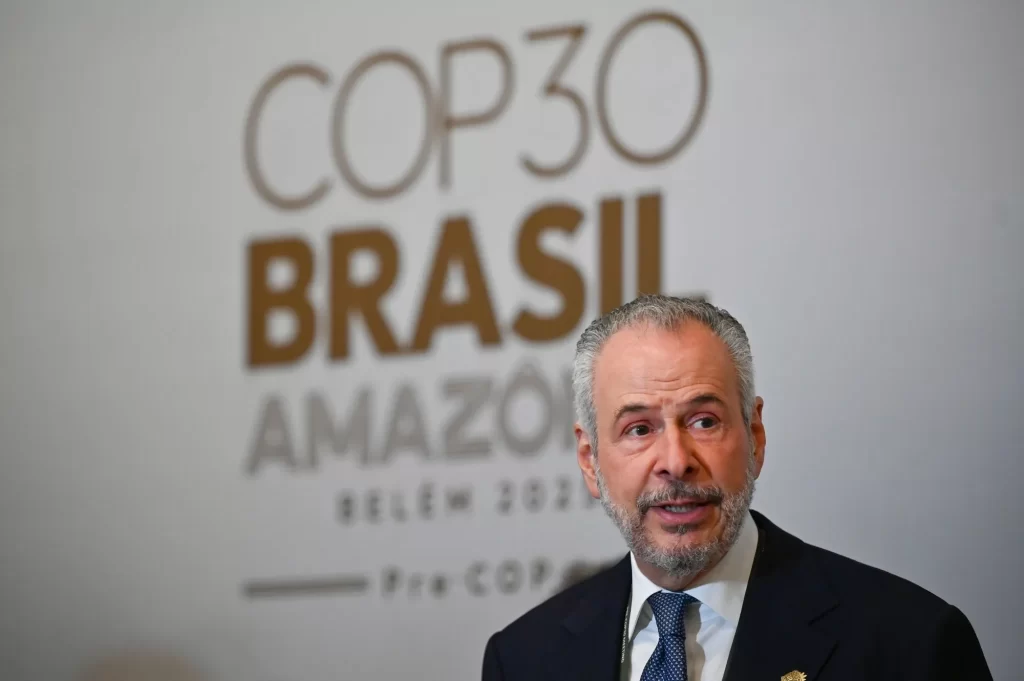
As global leaders prepare to convene in Belém, local officials are gathering in Rio de Janeiro for the COP30 Local Leaders Forum, co-hosted by the COP30 Presidency and Bloomberg Philanthropies. The forum aims to showcase how subnational governments can deliver tangible climate action despite political headwinds at the national level.
In addition, California Governor Gavin Newsom, a co-chair of the event and potential 2028 Democratic presidential contender, framed local climate action as a counterweight to federal inaction.
“Addressing the climate crisis starts at the local level,” Newsom said. “From mayors to governors, regional leaders are uniquely positioned to turn ambition into action. Subnational governments remain stable, innovative, and indispensable partners in tackling the climate crisis.”
A Divided Front
While the Trump administration doubles down on energy independence, many analysts warn that withdrawing from global climate leadership could isolate the U.S. from emerging green markets and alliances forming under new finance and adaptation frameworks.
In Belém, negotiators will continue building the “Baku to Belém Roadmap”, a plan to mobilise US$1.3 trillion annually in climate finance by 2035. The absence of the U.S. delegation could complicate those efforts and leave space for China, the EU, and the Global South to redefine the global financial architecture without American input.
As one European diplomat said, “The world will move on with or without the United States. The climate clock isn’t waiting for anyone.”