As a signatory to the 2015 Paris Climate Agreement, Nigeria has committed to contributing to the global effort to limit the rise in temperature and reduce greenhouse gas emissions. In line with this commitment, the Federal Government announced its ambition to achieve net-zero carbon emissions by 2060, outlining a clear pathway toward a cleaner and more sustainable energy future.
To support this pledge, Nigeria launched its Energy Transition Plan (ETP) in 2022, a comprehensive strategy designed to balance economic growth with environmental responsibility. The ETP outlines a clear pathway for the country to expand its renewable energy capacity, scale up off-grid electrification, accelerate the shift away from fossil fuels, and attract private sector investment to drive sustainable industrialisation.
It also targets five overarching national objectives: achieving net-zero emissions by 2060, lifting 100 million people out of poverty, delivering universal energy access, offsetting potential job losses in the oil sector and ensuring economic growth.
These national efforts have stimulated significant activity across the energy ecosystem. Progressive climate and power sector policies are being rolled out, off-grid and mini-grid projects are gaining momentum, private investors are showing renewed confidence in renewable energy, and solar Engineering Procurement and Construction (EPC) firms are strengthening their technical capabilities to deliver bankable, environmentally sustainable infrastructure.
Supporting this drive is Eauxwell Nigeria Limited, which has emerged as a leading EPC firm driving the resurgence of Nigeria’s power and renewable energy sector. The company is at the forefront of implementing solutions that directly support the nation’s decarbonisation agenda, helping to reduce carbon emissions across the country through the following initiatives:
Grid Tied Solar Projects
Eauxwell is recognised for its modern solar solutions, which provide alternative power sources to institutions and businesses across Nigeria. With over 150MWp of solar capacity deployed across the region, Eauxwell has established itself as a frontrunner in commercial-scale renewable energy deployment.
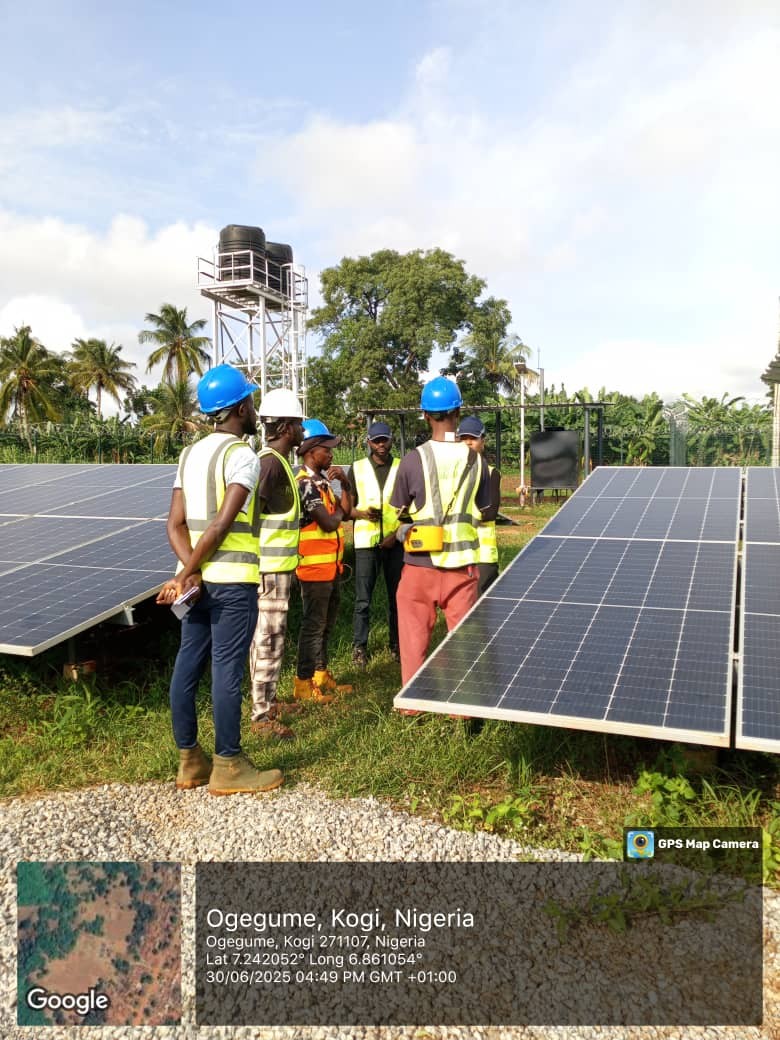
In 2022, the firm completed the Haske solar project, an 11.8 MWp project in Kano and Nigeria’s largest grid-connected solar facility delivering 10MW of electricity to the Kano Electricity Distribution Company. Under the Energising Education Programme (EEP) implemented by the Rural Electification Agency of Nigeria, the company has completed a number of the regions largest hybrid projects, namely:
- Federal University of Agriculture, Abeokuta (FUNAAB) (3.4 MWp solar hybrid power plant + 2 MWh BESS)
- The Federal University of Technology, Owerri (FUTO Hybrid Solar Project: 8.5 MWp + 17 MWh BESS)
- The University of Port-Harcourt (UNIPORT Hybrid Solar Project: 10.8 MWp + 20 MWh BESS) and
- The University of Uyo (UNIUYO solar hybrid system: 3 MWp + 8 MWh BESS).
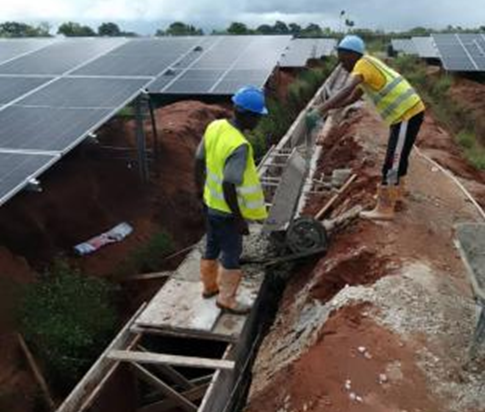
When complete, these hybrid solar projects will replace fossil fuel-based generators, thereby substantially reducing carbon emissions. Eauxwell was also the EPC contractor for solar mini-grids built in several rural communities across Nasarawa, Kogi, and Niger States. Those three sites were officially handed over to Engie Energy Access Nigeria Limited in August 2025.
Through these projects, Eauxwell is enabling Nigerians to rely less on diesel and petrol. This shift significantly reduces emissions, as solar projects are estimated to displace up to 75,000 tons of CO₂ annually, contributing to a cleaner, healthier, and more sustainable environment for all.
Workforce Sustainability
One of Eauxwell’s most impressive contributions to sustainability is its investment in human capital, as workforce development and local capacity building are integral to its operations. The company often organises training and workshops for university students, fresh graduates, and young people, helping them build thriving careers in the renewable energy sector.
Recently, the firm, in partnership with the Federal University of Agriculture, Abeokuta (FUNAAB), completed a one-month intensive training programme in solar technology for 100 students of the College of Engineering. Through the programme, which ran from September to October 2025, the company aimed to prepare students for the growing demand for solar solutions in Nigeria.
Similarly, Eauxwell partners with international engineers to train local engineers, artisans, and technicians in solar installation, maintenance, and system optimisation. These specialised technical trainings also cover emerging technologies, such as solar PV design, battery energy storage systems, and smart grid applications.
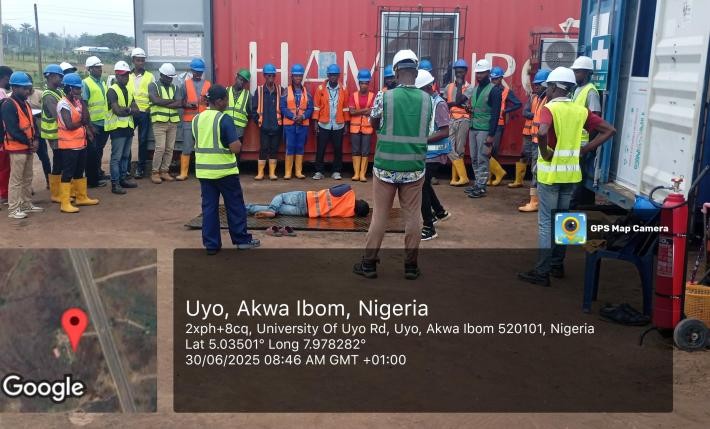
Furthermore, Eauxwell conducts workshops for its over 200 employees, ensuring they are equipped with the skills and knowledge to deliver top-quality, standardised services. The firm conducts HSE/ESG (Health, Safety, and Environment) and (Environmental, Social, and Governance) every day for a minimum of 30 minutes. The topics range from safety procedures to site waste segregation and disposal rules. In addition, Eauxwell organises Gender-Based Violence (GBV) trainings, which occur less frequently, to prevent incidents of GBV on the sites.
Eauxwell is proving that Nigeria’s 2060 net-zero target is achievable through its innovative solar solutions,, and robust workforce development programmes. Eauxwell’s integrated approach, centred on addressing technical constraints, environmental safety, and human capital development, offers a model that should be emulated across Nigeria’s renewable energy sector. Adopting similar strategies will strengthen project delivery and operational efficiency and also accelerate national progress toward a low-carbon, cleaner, reliable and sustainable energy future.