Electricity subsidy has become a central and enduring feature of the Nigerian power sector, designed primarily to enhance affordability and improve access to electricity. However, its growing fiscal burden on the Federal Government and impact on the viability of the electricity market have come under increasing scrutiny in recent years.
Media reports indicate that tariff shortfalls (representing the gap between Cost Reflective Tariffs and the Allowable Tariffs charged to consumers), funded by the Federal Government, in the form of subsidies, averaged about N200 billion annually for several years, rising to a staggering figure of about N600 billion in 2022 and N628.61 billion in 2023.
Efforts to reform the subsidy regime are not new. The foundation for Service-Based Tariffs, laid in 2020, marked the first structured step towards cost-reflective pricing, with policy signals at the time indicating a phased withdrawal of subsidies. A major turning point occurred in April 2024, when subsidies were removed for Band A customers and Service-Based Tariffs were fully implemented for that category. While this move was projected to deliver fiscal savings exceeding N1 trillion, market realities quickly moderated these gains.
Specifically, the aggressive devaluation of the naira and rising gas prices pegged to the US Dollar increased the Federal Government’s subsidy burden relative to other customer bands whose tariffs remained frozen. Consequently, subsidy obligations in 2024 surged to N1.94 trillion, according to the Nigerian Electricity Regulatory Commission (NERC). By 2025, despite NERC’s monthly tariff adjustments to reflect macroeconomic changes, subsidies accrued between Q1 and Q3 were reported to have exceeded N1.5 trillion.
From a market perspective, unstructured subsidies distort price signals, weaken market discipline, and reduce operational incentives for Distribution Companies (DisCos). Comparative tariff data published by NERC indicated that Nigeria’s average Allowable Tariff (tariffs actually charged to customers) in 2024 remained one of the lowest across several African jurisdictions, representing about 63% of the average tariff charged in peer markets. This structural underpricing continues to place sustained pressure on public finances and the liquidity of the electricity market.
Policy stakeholders have increasingly acknowledged the fiscal strain. The Honourable Minister of Power, Adebayo Adelabu, has repeatedly described the current subsidy regime as unsustainable and has advocated for a more targeted framework focused on vulnerable households. Conversely, critics caution that abrupt subsidy removal could deepen economic hardship, heighten electricity theft, and undermine broader policy objectives such as universal energy access and energy transition.
Despite improved fiscal allocations to states, the experience following the removal of the fuel subsidy serves as a cautionary tale. Without robust social safety nets, inflationary pressures on households could trigger significant pushback and increased collection losses for DisCos. Beyond fiscal cost, the persistent accumulation and delayed settlement of subsidy arrears have materially affected market liquidity.
Generating Companies (GenCos) have consistently raised concerns over outstanding subsidy payments and legacy debt reportedly exceeding N4 trillion since 2015, warning of operational risks if payment delays persist. In response, the Federal Government launched the Presidential Power Sector Debt Reduction Programme (Programme) in December 2025, authorising up to N4 trillion in government-backed bonds to address “verified arrears” owed to GenCos and gas suppliers.
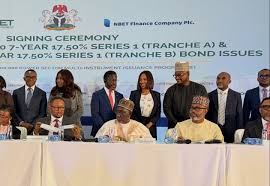
The Programme debuted with a N501 billion Series 1 Power Sector Bond, which was fully subscribed, and is projected to raise about N1.23 trillion in the first quarter of 2026. Notably, following an audit of GenCo’s claims on subsidy payments and legacy debts by the Federal Government, recent media reports indicate that only N2.8 trillion of the submitted debts were approved for settlement.
The variance between the amounts claimed by the DisCos and the N2.8 trillion approved by the Federal Government is likely to trigger a more rigorous reconciliation process. It could give rise to further legal and commercial disputes with GenCos and gas suppliers over outstanding amounts.
On projected subsidies, recent reports suggest that 2026 electricity subsidies could rise to as high as N3.6 trillion, signalling a further escalation in fiscal exposure. In parallel, policy discussions have emerged regarding a possible restructuring of Federal Government subsidy funding.
According to media reports, the Director-General of the Budget Office of the Federation, Tanimu Yakubu, indicated at a recent training and sensitisation event for Ministries, Departments and Agencies, that the Federal Government intends to distribute the subsidy burden across the Federal, State, and Local Governments, deducting subsidy contributions from the Federation Account and channelling the relevant contributions for disbursement through the Power Assistance Consumers Fund (PACF) established under the Electricity Act. The funds under the PACF are, by law, required to support vulnerable and underprivileged households.
This development has been met with mixed feelings within the power sector. From a legal standpoint, the validity of unilateral deductions from the Federation Account for electricity subsidies that are not “first line charges” may be challenged by state governments, particularly those seeking to exercise regulatory powers pursuant to the Electricity Act. Furthermore, Section 117 of the Electricity Act, which governs the implementation of subsidies through the PACF, makes subsidy funding by the Federal or State Government discretionary rather than mandatory.
Questions also persist regarding the sharing formula, governance structure, and implementation mechanics of the proposed multi-tier subsidy model. On the other hand, some industry experts argue that shared fiscal responsibility could accelerate the transition to cost-reflective tariffs and improve market efficiency, thereby enhancing investor confidence.
Ultimately, the policy dilemma is clear. A sudden and complete withdrawal of subsidies could trigger shock and socio-economic hardship. In contrast, the continued provision of broad, unstructured subsidies without a defined transition pathway is fiscally and commercially unsustainable. A gradual, well-calibrated reform approach, anchored in cost-reflective tariffs and targeted subsidies, remains the most viable path.
In this regard, the operationalisation of the PACF is no longer just a statutory requirement but a commercial necessity. Although the framework for the PACF has existed since the enactment of the Electric Power Sector Reform Act of 2005 and is also preserved under the Electricity Act, there has been no public report of the implementation of the PACF to date. If the PACF is to serve as the central vehicle for subsidy reform, the Federal Government must prioritise its establishment, funding structure, and conversations around governance mechanisms.
Furthermore, the absence of any formal policy statement on the proposed distribution of electricity subsidy costs across the three tiers of government suggests that the initiative may still be under consideration. As the reform discourse evolves, greater clarity on the legality of shared fiscal responsibility and stakeholder alignment will be essential in boosting investor confidence in the sector.