The dialogue was moderated by Lucy Eworo, Senior Portfolio Officer at the African Enterprise Challenge Fund (AECF), and featured Musa Obed, Principal at Angeles, a seasoned expert in capita l structuring and investment management.
Context and Key Challenge
Opening the session, Lucy Eworo set the scene: Nigeria faces a significant energy access gap, with an estimated 85 million people lacking reliable electricity. While DRE solutions, including solar home systems, mini-grids, and commercial and industrial solar, have emerged as viable pathways to expand energy access, financing remains the critical bottleneck. DRE projects tend to be small, decentralised, and burdened by short loan tenors, foreign exchange risk, and limited credit enhancements, all of which constrain bankability and limit investor participation.
Nigeria, however, holds over ₦18 trillion in pension fund assets, of which less than 1% is currently allocated to infrastructure and energy. The central question driving the dialogue was: how can these domestic capital pools be structured and unlocked to support bankable DRE projects through green bonds?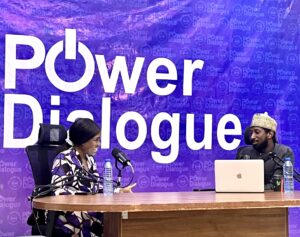
Practical Green Bond Structures
Musa Obed drew on three case studies to illustrate what has worked in the Nigerian market:
- North South Power (NSP): In 2019, NSP created a Special Purpose Vehicle (SPV) and partnered with InfraCredit, backed by the Nigeria Sovereign Investment Authority (NSIA), to raise ₦8.5 billion. InfraCredit’s AAA credit rating wrapped the bond, pricing it at just 70 basis points above the federal government bond rate, making it attractive to institutional investors.
- Prapower Bond: Following a similar structure with InfraCredit’s AAA wrap, Prapower utilised Sukuk (Islamic financing) to raise ₦3.4 billion for a southern Nigeria energy project.
- C Solar Bond: C Solar raised approximately ₦9 billion by combining World Bank DARES programme grants, an established project track record, and InfraCredit’s guarantee wrap, demonstrating the power of blended finance.
Obed emphasised that no issuer has successfully raised green bond capital alone. The minimum bond size permitted by Nigeria’s Debt Management Office (DMO) is ₦10 billion, meaning project aggregation is not optional, it is a structural requirement.
Unlocking Domestic Institutional Capital
On the question of pension funds, Obed noted that recent regulatory changes now permit up to 15% of pension fund assets to be allocated to infrastructure, a category that includes qualifying green bonds. However, green bonds must compete with Federal Government bonds, which currently absorb 65% of pension portfolios.
He argued that a compelling case can be made for the 15% infrastructure allocation if development finance institutions (DFIs), particularly InfraCredit, supported by FCDO’s Climate Finance Blended Facility and the British International Investment (BII) first-loss provisions, continue to de-risk instruments and build investor confidence.
For commercial banks, Obed proposed tax credit incentives as a mechanism to redirect lending toward renewable energy projects, alongside internal bank sensitisation through dedicated green finance departments. He noted that Zenith Bank and UBA are among institutions that have begun building such units.
The Role of Development Finance Institutions
Development finance institutions are not merely facilitators, they are essential enablers of Nigeria’s green bond market, the session concluded. InfraCredit’s AAA-rated guarantee, first-loss capital from FCDO, and extended provisions from BII have been the foundation upon which all major DRE green bond issuances have rested.
Obed cautioned against undervaluing these partnerships, noting: “If FCDO’s first-loss provision is not available, Cee Solar cannot raise a green bond, and neither can Prapower.” The goal, he argued, should be to position DFIs as market enablers until domestic commercial banks build the appetite and understanding to fill that role independently.
Scaling from Pilots to Bankable Pipelines
A central theme of the dialogue was the need to move beyond isolated pilot projects toward a robust, standardised pipeline of bankable DRE assets. Obed identified poor project contextualisation as the primary bottleneck, the socioeconomic viability of project locations must be thoroughly assessed before deployment. A mini-grid placed in a community where average monthly income is below ₦15,000 is structurally set up to fail.
He called for a national database of pre-assessed project pipelines, potentially coordinated through the Federal Ministry of Finance or NITDA, that would allow developers and investors to identify viable communities more efficiently, reducing the prohibitive cost of feasibility studies.
On standardisation, Obed pointed to Odyssey’s role in the World Bank DARES programme as a model: a trusted third-party assessor that validates projects against defined criteria, functioning similarly to a credit ratings agency for the DRE space. He also called on government to publish minimum quality standards for equipment and project structures, creating a consistent benchmark for all market participants.
Coordination and National Interest
When asked about the single most important action needed to unlock local capital through green bonds in the next 12 months, Obed was unequivocal: national interest.
“Nothing will work until actors are genuinely interested in making it work,” he said. He cited the transformation of Nigeria’s stock exchange, now a thriving market, as proof that when influential stakeholders commit to market development, results follow. He expressed encouragement at the Federal Ministry of Finance’s growing engagement with the Green Climate Fund (GCF) and its collaboration with NCCC as a designated national entity, describing it as the beginning of the kind of high-level championing the sector needs.
Closing Remarks
Moderator Lucy Eworo closed the session by summarising the dialogue’s key findings: green bonds present a clear opportunity for Nigeria’s energy access challenge, but realising that opportunity requires the right structures, project aggregation, blended finance, credit enhancement, alongside a strong pipeline of quality projects, better risk allocation, and coordinated action across public and private stakeholders.
“The opportunity is clear,” she said. “What we need now is the champion of national interest to bring it all together.”
The Electricity Hub will continue to document and disseminate insights from the session to relevant government ministries, DFIs, and private sector stakeholders.